A path of cultural accessibility growing under the banner of Design for All

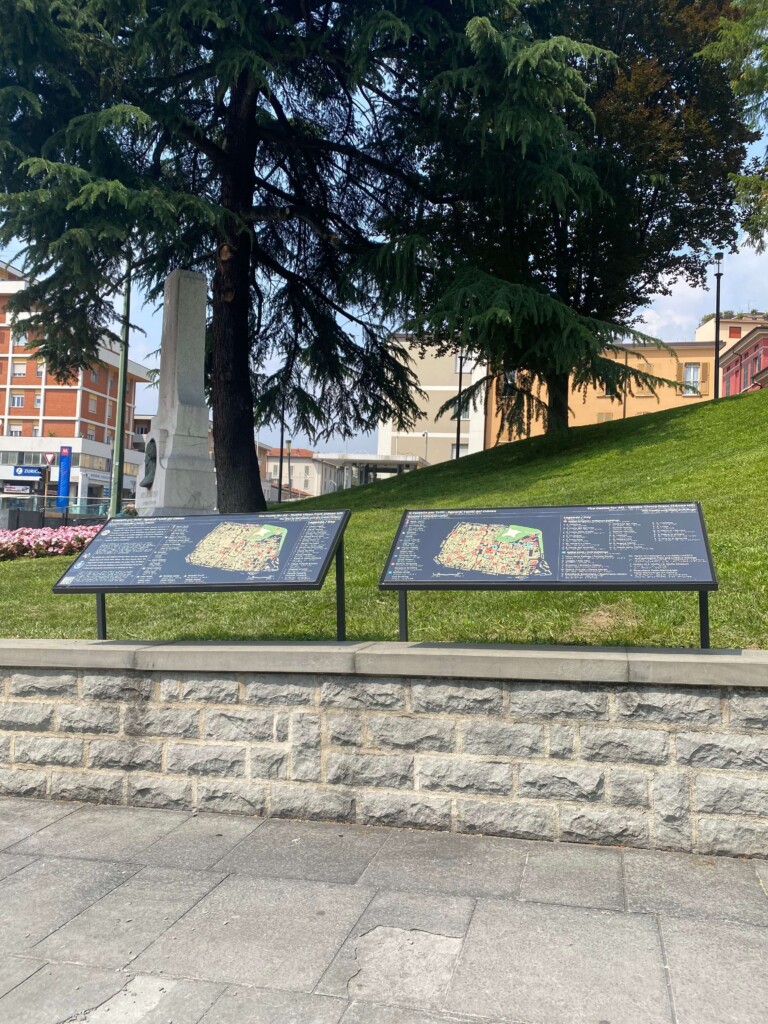

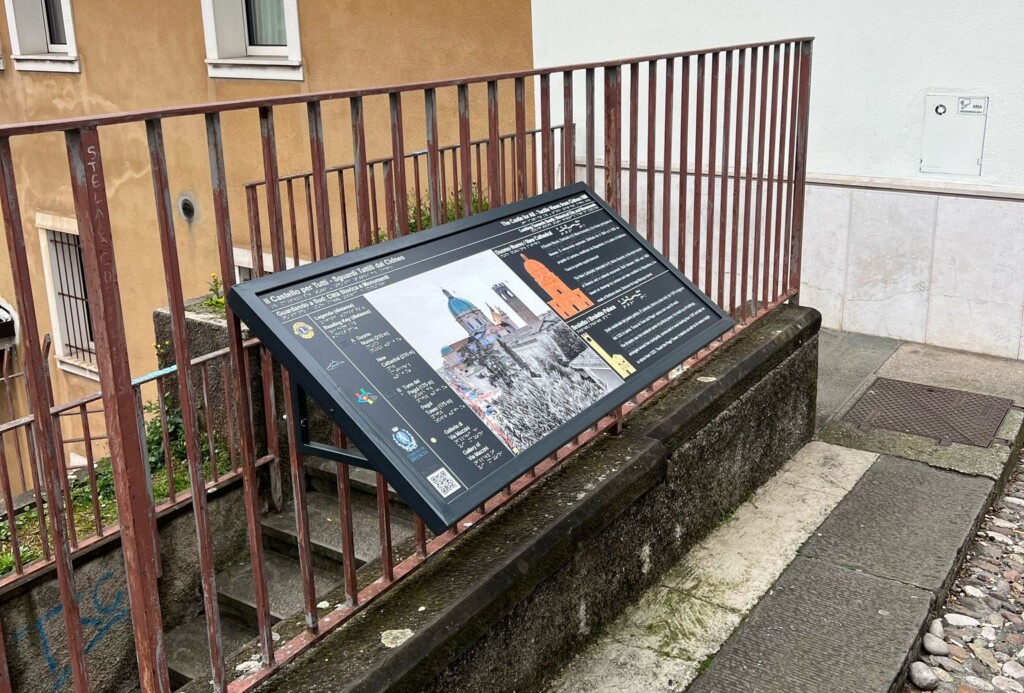
On the occasion of the annual meeting of the Friends of the Cidneo Committee, Professor Ivana Passamani (Founder and President of CITISLAB) spoke to present the progress of the project “The Castle for All- Tactile Glances from the Cidneo.”
In the heart of Brescia, the Castle is enriched with a system of tactile panels designed to make the visit an accessible and shared experience. The project, launched in 2022 by the Lions Club Brescia Leonessa X Giornate together with the Friends of the Cidneo Committee and with the involvement of the Italian Union of the Blind and Visually Impaired, is a concrete example of cultural heritage accessibility applied to urban historical heritage.
The intervention is part of a vision consistent with the principles of design for all, with the aim of offering content usable not only by blind and visually impaired people, but by all visitors. Texts in Italian, English, and Braille, relief representations, and a narrative that integrates urban space, architecture, and landscape transform the Castle into a space of multisensory knowledge.
The panels already made
To date, seven tactile panels have been installed placed at strategic points in the city: near the San Faustino Metro, at the entrance to the Castle, in the Locomotive Square, on the French Tower and above the gallery on Via Mazzini.
The contents are organized around three macro-themes: the city-castle relationship, the architectural structure of the monumental complex, and the panoramic views from the Cidneo hill. Each panel is conceived as an autonomous element, allowing a complete or thematic fruition, according to inclusive path logics.
The project is a concrete example of cultural accessibility, in which inclusive communication goes beyond the oculocentric approach and proposes a multisensory experience based on touch, orientation, and spatial understanding.
The Locomotive for All
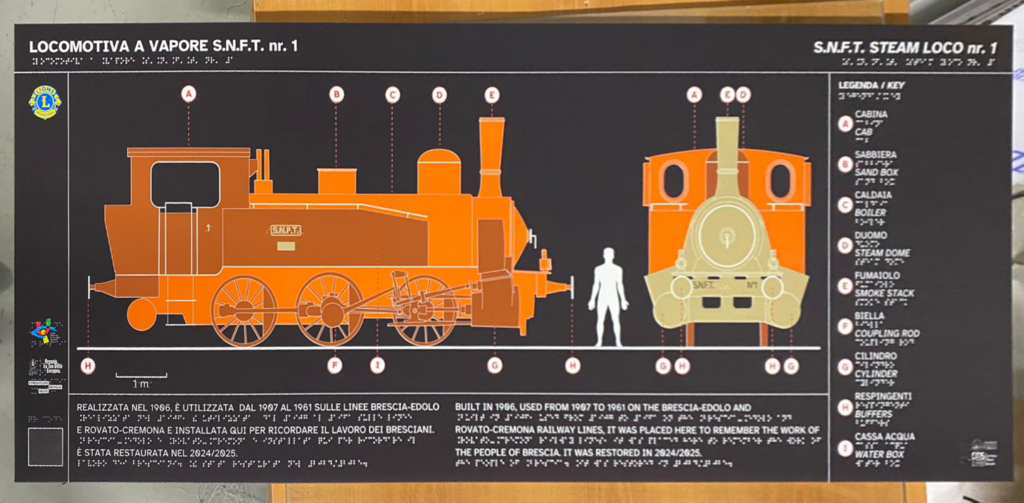
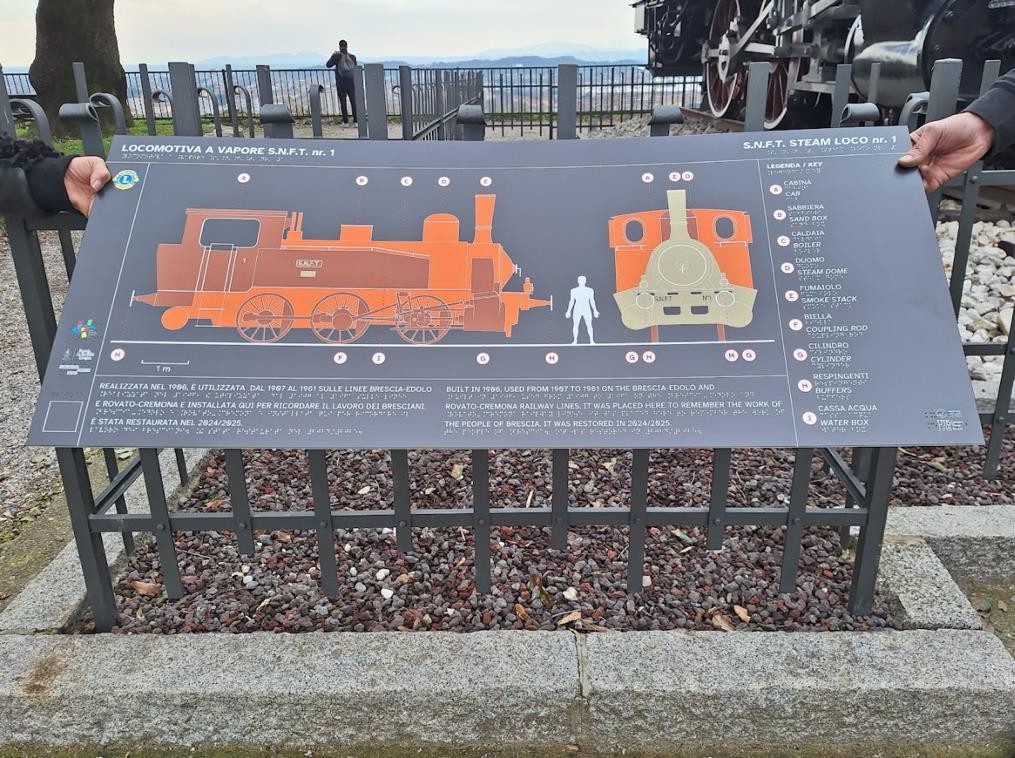
A new installation dedicated to the recently restored historic Locomotive No. 1 is planned for 2026. The new panel, curated by CITISLAB, will be placed near the artifact to allow tactile exploration of the object and its historical value.
With this new installation, the system of tactile panels is expanded by strengthening the existing tactile pathways and consolidating a design vision oriented toward inclusion. The Castle thus confirms itself as a laboratory of innovation for a truly accessible and shared culture.
A further step toward a more inclusive city, where tactile panels become concrete tools for cultural participation and enhancement of Brescia’s heritage.