


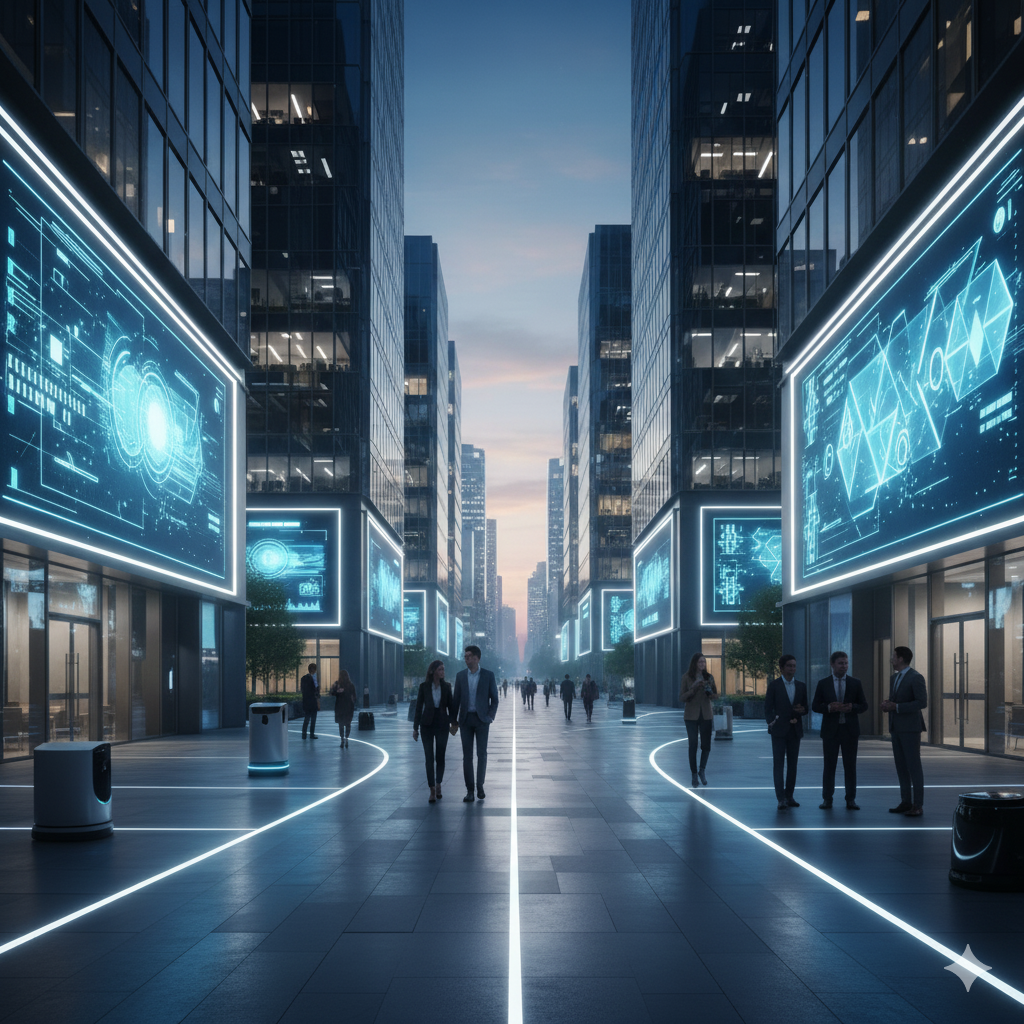
To go beyond simply viewing places with high functional specialization to understanding their organization
Among the different Sensory Itineraries we propose, theTechnological Itinerary demonstrates Citislab’s attention to the communication of sites and places that in everyday life are not considered worthy of attention with respect to the issue of communication to citizens.
So introducing this particular narrative declination toward this theme represents a real challenge that we believe is important to undertake.
These are paths that are developed within sites with highly specialized functions such as:
– commercial functions commercial: exhibition fixtures, event spaces.
– functions of neuralgic junction: airports, ports, railway stations, major infrastructure such as bridges and viaducts
– educational functions educational: schools, universities
– healthcare functions health care: nursing homes, hospitals.
Communicating the landscape and contextual relationships of these artifacts, along with their constructional, technological, distributional, and formal aspects, means going beyond the basic orientation needs of the blind (to be met through tactile maps coupled with pedo-tactile paths) to provide cultural data that only for the sighted can be partially guaranteed and taken for granted, but which deserve to be explored through timely and accurate reading.

It is precisely these interpretations that can make all the difference for everyone: one can walk through the spaces of a train station or airport to reach the platform or gate without understanding the building that houses us and its relationship to the context, or one can receive insights and information to make this experience one’s own and to add new knowledge to one’s baggage.
One can visit a fair focusing only on the route to the booths of interest, or one can understand the context in which it is set and be clear about its floor plan and the location of different services.
The same can be said for a hospital or nursing home, which could give users an informative and, why not, entertaining and comforting moment about the building and the views visible from the windows or garden, or for educational places where the practice of visual-tactile observation could be a pivotal moment of learning, as well as understanding the orientation and shape of the building.
There is also another important aspect on which Citislab wants to propose to the Public Administrations special attention regarding the communication.
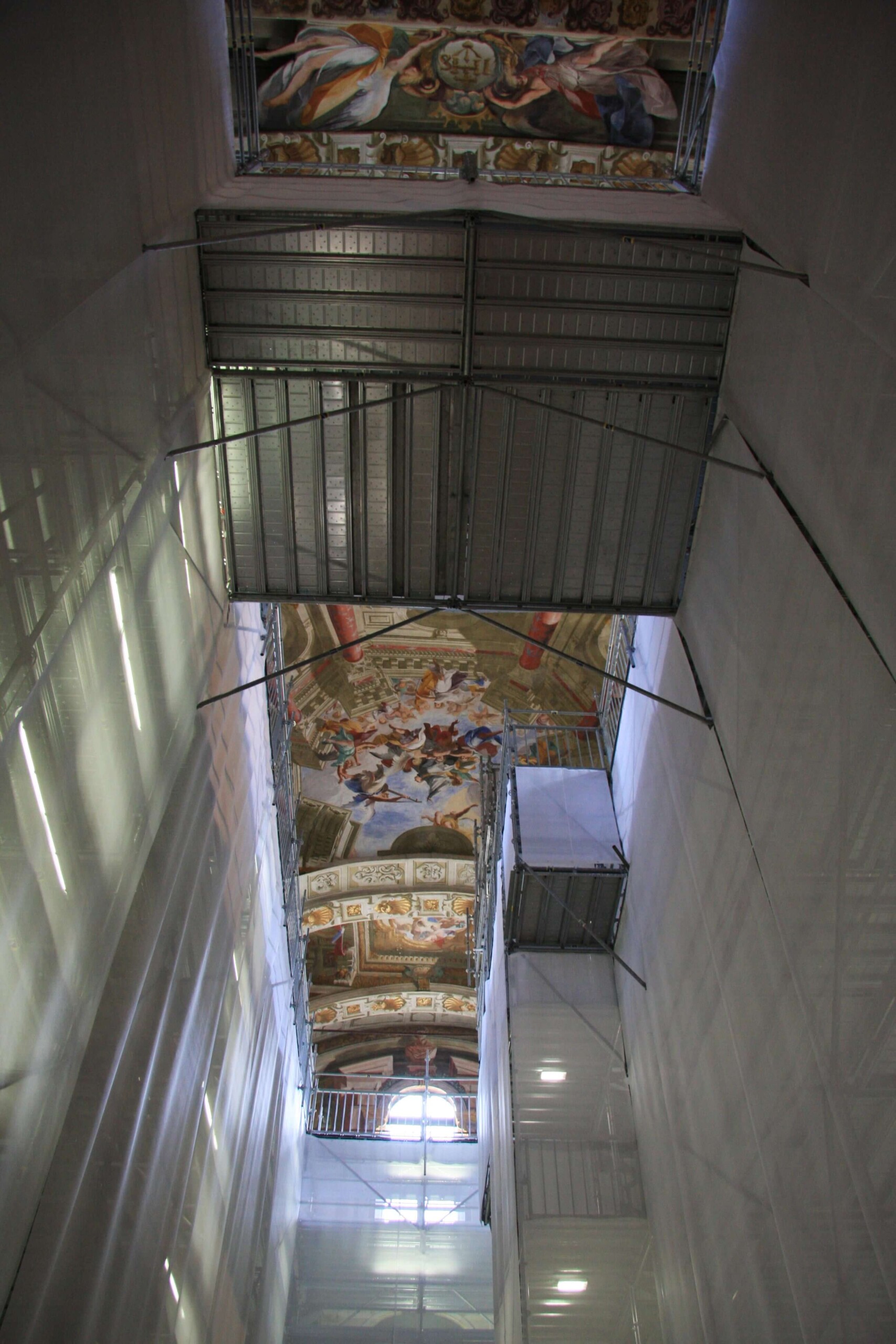
The idea is to open to the citizenry the information on major construction sites, which impact the urban space and often with the regular enjoyment of it: telling citizens and tourists about the urban-architectural changes taking place facilitates the process of cultural awareness, encourages the actualization of the ongoing process (knowing what is happening behind the barriers while it is happening) and makes it easier to accept any inconveniences due to the works.
In recent years, a number of active construction sites in buildings of cultural interest (churches, palaces) have opened for guided tours, showing that people are beginning to share the communicative value of the ongoing process.
We at Citislab believe that inclusive information placed on the public land and on this side of the fences, accompanying the construction site area, provide an opportunity for knowledge.
Informing about what is being accomplished beyond the barriers or behind the scaffolding can thus be formative and contribute to forming a sense of civic duty and affection for the res publica, demonstrating that the citizen is also the object of informational attention.
Combined solutions can be adopted for a path of accessibility and inclusiveness “for All” with functional proposals for both knowledge of the specialized building and its relationship to the surrounding space and, in the case of a construction site, of the project under construction and its dynamics.
In particular, Citislab proposes.
– to equip new technological artifacts that have strategic value to the community (an example might be the Genoa San Giorgio Viaduct, now built by Renzo Piano, better known as the Morandi Bridge) with a proposed information points accessible, inclusive and supportive of visitors: tactile totems, tactile panels and/or tactile tables enriched by content in QR-Codes or by Interactive Technologies that illustrate the features of the new realization
– to provide for large urban or suburban construction sites (but where there is a passage of people) inclusive communication, through tactile totems, tactile panels and/or tactile tables that fully replace the usual information signs for the benefit of the sighted only to illustrate what is being done at the construction site in progress.

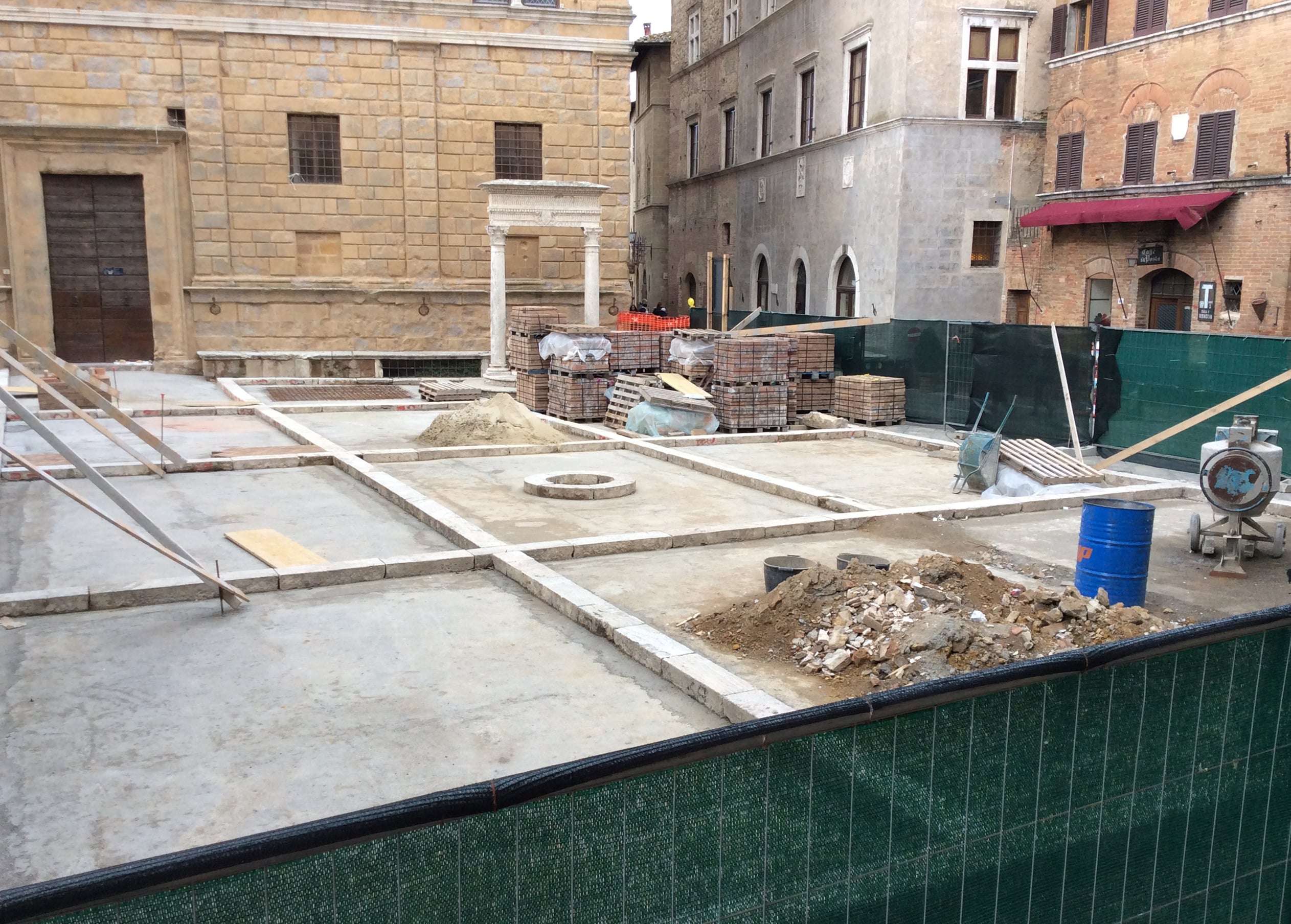
The panels, after the construction site is finished, will become part of the building’s narrative.
We believe that virtuous actions that facilitate information about what affects the community while enhancing inclusion have positive effects on the well-being of people, strengthening their sense of belonging to the community.
These particular Technology Routes, starting from the UN Convention of 2006 on the rights of persons with disabilities, put in place a concrete strategy to facilitate conditions of accessibility e knowledge of all possible users.
Here visual stimuli are integrated with those derived from the tactile and auditory perception.
We believe that our proposed Technological Itinerary centers on the goal of facilitating for everyone an awareness of how the space around them is transformed, even if only temporarily, by the installation of a construction site (recall that one of the experiences proposed by the Dialogue in the Dark set up since 2005 at theInstitute for the Blind in Milan is precisely to walk in the urban space next to a construction site in activity) and to understand how then definitively the new artifact fits into the landscape.