


From research to products and inclusive solutions
The spin-off CITISLAB was born from experimentation and academic research and passion for culture, sinking its roots in theUniversity of Brescia. Our beliefs are rooted in the idea that theaccessibility to cultural content represents a universal right, a value to be guaranteed and promoted in every context.
This ambitious project is the result of the research work university carried out since 2015 by Ivana Passamani on the topics of Tactile Communication and since 2014 by Olivia Longo on the topic of Microarchitectures; the two proponents were joined by Daniela Fiordalisi, whose experiences and enthusiasm guarantee another point of view. Her expertise on inclusion issues is demonstrated, among other things, by her collaboration with Elena Di Giovanni of the University of Macerata for a workshop teaching at the AMAC (Accessibility to Media, Art and Culture) master’s program. In this activity, she has combined her passion for Opera and Ballet with an in-depth study on the accessibility of art venues in general (inclusive paths of museums, traveling and permanent exhibitions, cultural events).
With the contributions of other partners Mario Redaelli, Federico Rossi, and Virginia Sgobba, the spin off started the journey toward inclusive and multisensory communication.

Logo of the 2006 UN Convention on the Rights of Persons with Disabilities
Our story begins with a deep conviction: every individual deserves the opportunity to fully enjoy the beauty that surrounds us. At a time when the access to culture is often mediated by technologies and languages that do not take into account the diversity, we have decided to embrace an inclusive vision.
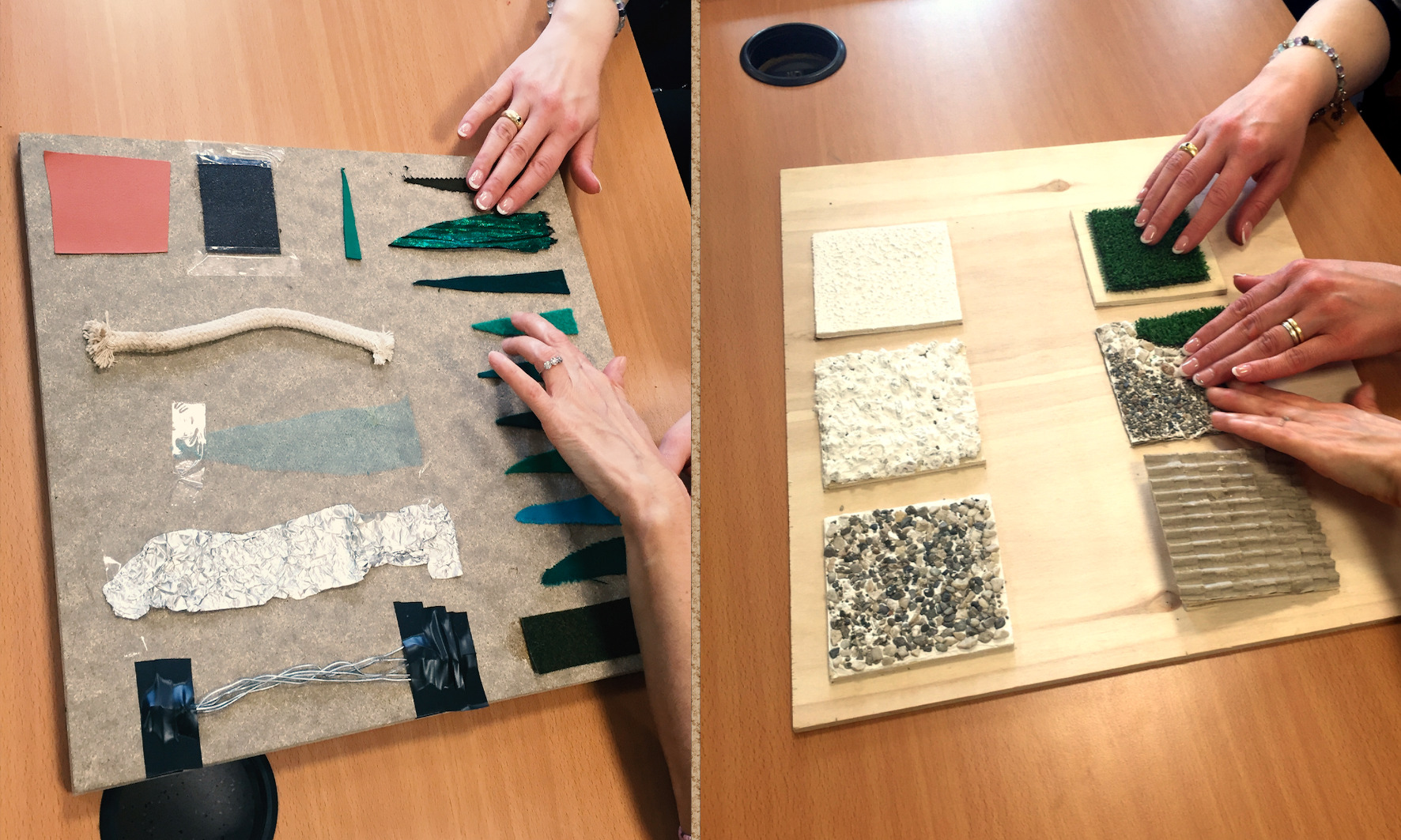
The first experiments by Ivana Passamani began in 2015 in Educational Workshops in which members of theUICI of Brescia. The activities were aimed at touching and exploring different kinds of materials to associate them with elements of landscape or architecture, in order to create three-dimensional “home-made” models that explicated in visual-tactile form the peculiarities of passages of landscape and historic buildings.
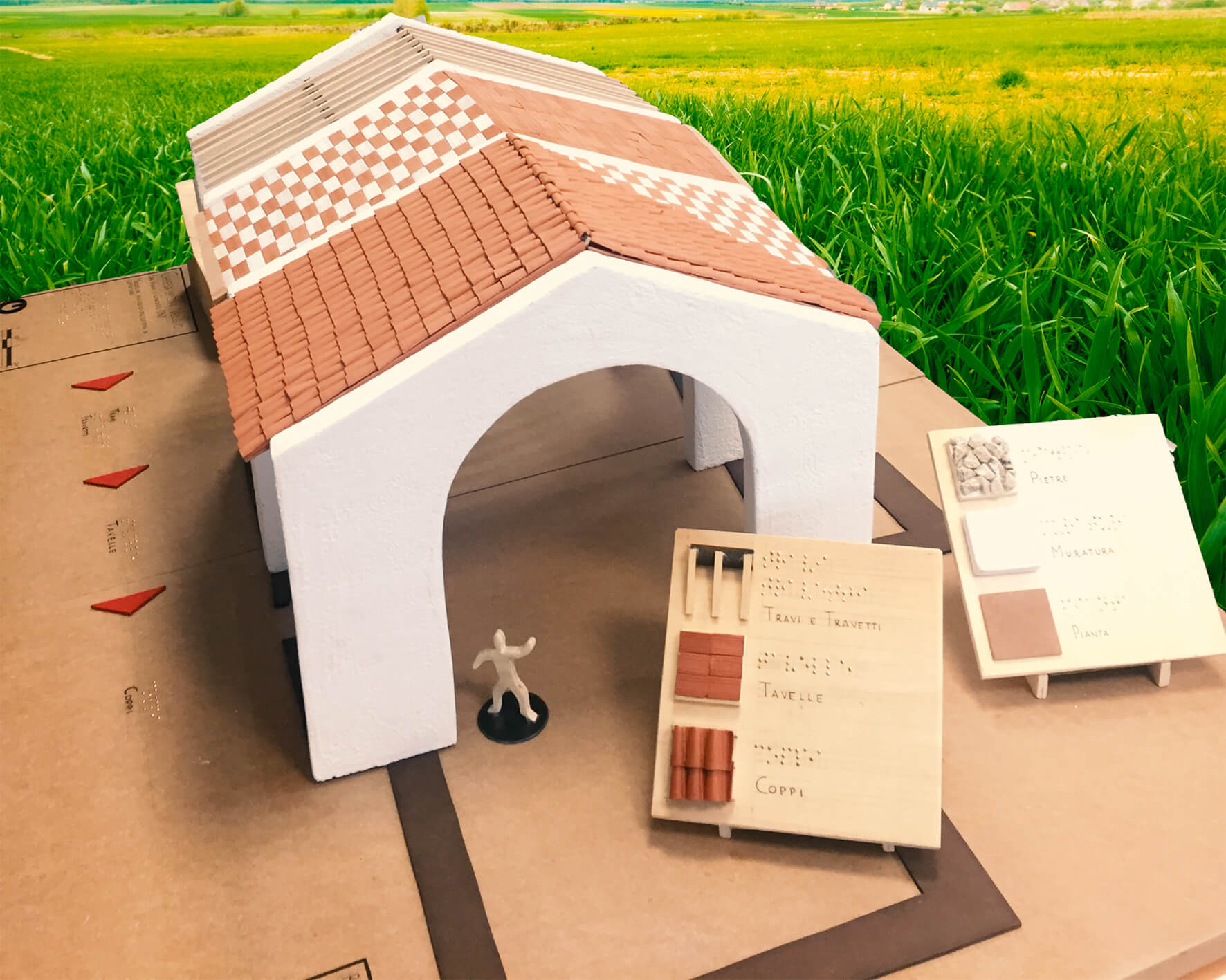
Many three-dimensional models, made in the Architectural Survey Laboratory, were offered to the Brescia UICI during the Press Conference “Tactile Architecture in gift. From didactic experimentation to sensory paths,” which took place at Brescia’s Palazzo Loggia in April 2016. This choice allowed the models, kept at the UICI of Brescia, to be shared with members and made available to blind tourists visiting Brescia.
The subsequent Seminar “Hands on Architecture. Seeing with the Eyes, Seeing with the Fingers” conceived and coordinated by Ivana Passamani (with Alberto Arenghi) at the University of Brescia in May 2016 made official the start of the university research activity.
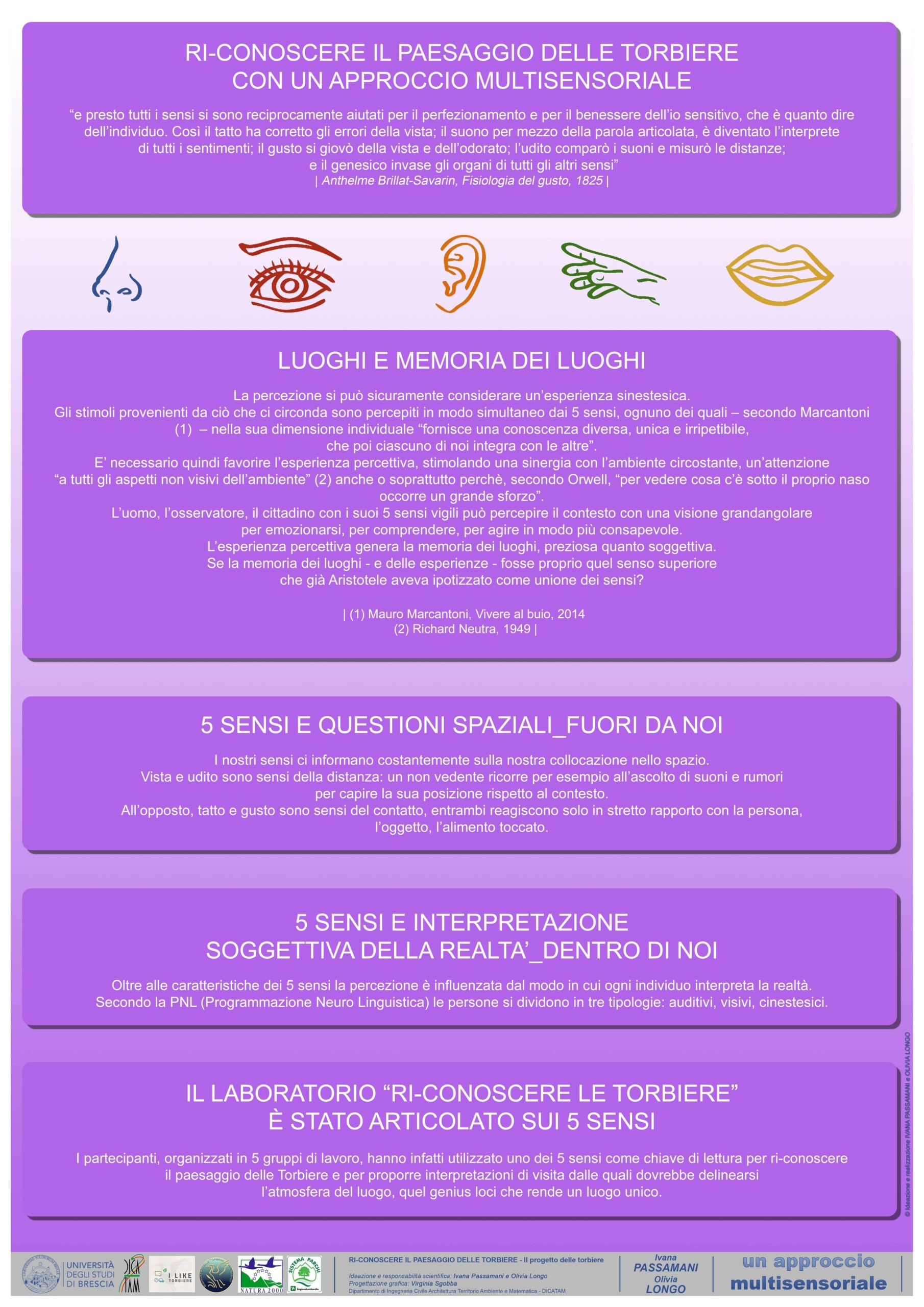
The decision to expand the research to the more all-encompassing aspect of the multi-sensoriality made it possible to devise and coordinate with Olivia Longo the Research Lab Project “Re-knowing the Peatlands Landscape,” which was carried out as part of the “I like Torbiere” project, funded by the Cariplo calls for proposals 2016 and coordinated by the Torbiere del Sebino Nature Reserve Management Authority in a Network agreement with the University of Brescia. The partners, in addition to UNIBS, included among others. Province of Brescia, Franciacorta Foundation, Natura Life Association..
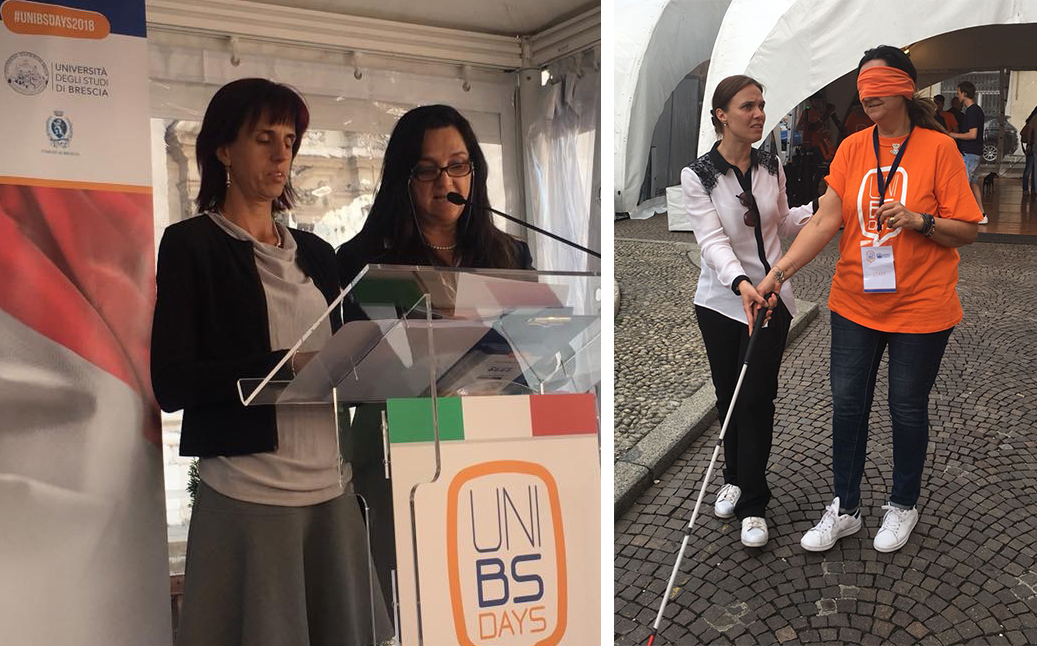
In 2018, the UNIBSDAYS 2018 annual event featured two very significant events:
- During the “Constitution Relay: Reading Marathon” organized by UNIBS, Ivana Passamani and Sandra Inverardi, president of the Brescia UICI, read in two voices theArt. 3 of the Italian Constitution which reads: All citizens have equal social dignity and are equal before the law, without distinction of sex, race, language, religion, political opinion, personal and social conditions. It is the duty of the Republic to remove obstacles of an economic and social order, which, by effectively limiting the freedom and equality of citizens, prevent the full development of the human person and the effective participation of all workers in the political, economic and social organization of the country .
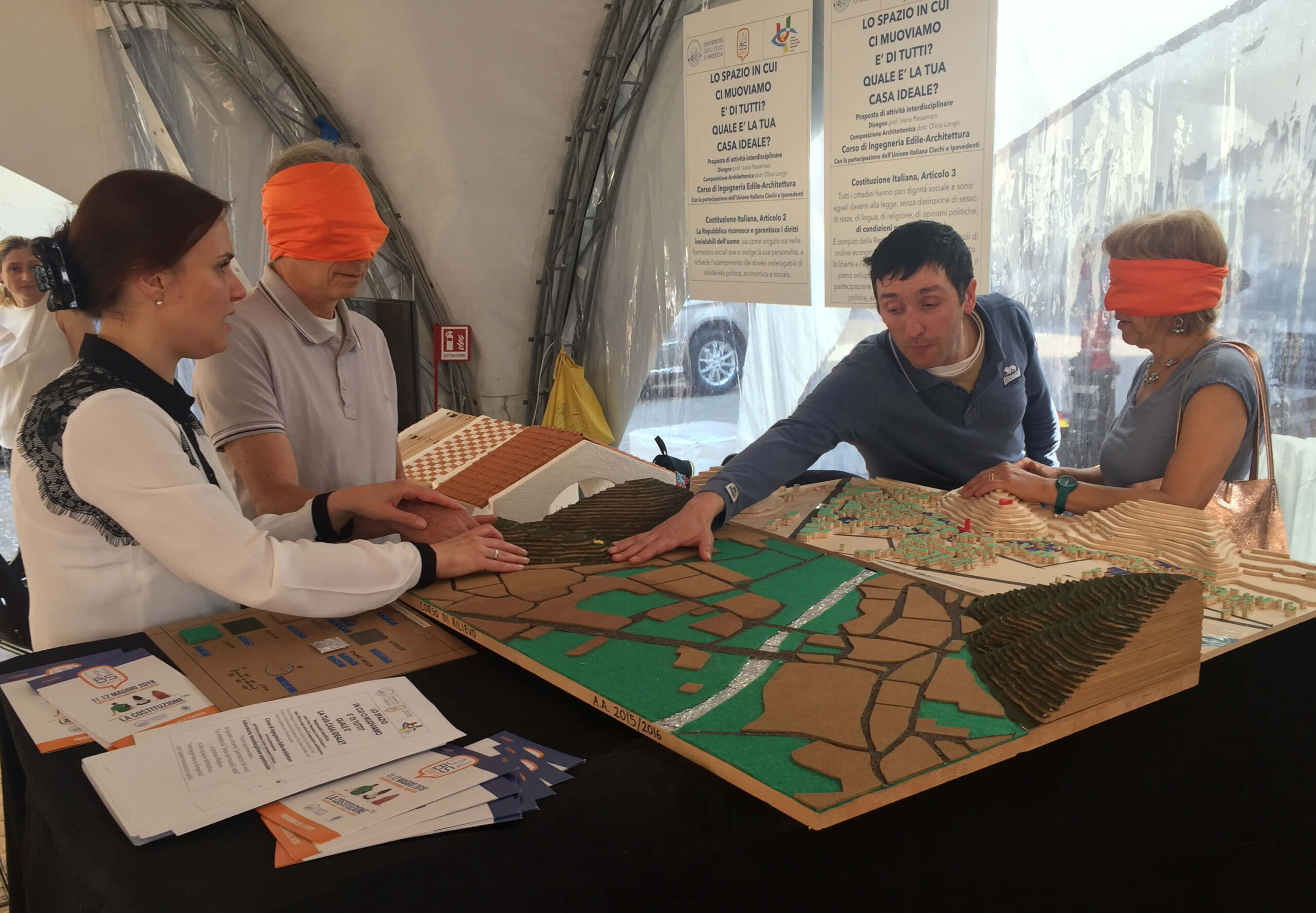
The Interdisciplinary Experiential Workshop “Does the space we move in belong to everyone? What is your ideal home?” conceived and coordinated by Ivana Passamani and Olivia Longo. On this occasion, again in collaboration with the UICI of Brescia, experiences of tactile exploration of landscape and architectural models made as part of Ivana Passamani’s Architectural Survey course, as well as guided tours by the blind of urban spaces.
In 2022 and 2023, the theme of inclusive communication was proposed, among other planned activities, within a research contract between the Municipality of Brescia and the University of Brescia. The contract, “The city of memory in the capital of culture: knowledge and enhancement of Brescia’s Vantiniano cemetery,” had Ivana Passamani as scientific head. Following the research, survey and knowledge phase of the entire site, five cultural routes of visits, proposed according to the criteria of accessibility for all through tactile panels. Olivia Longo and Virginia Sgobba collaborated on this research.
Another scientific activity of Ivana Passamani, however, involved the coordination of the cultural proposal “The Castle for All. Tactile glances from the Cidneo,” launched in 2022 by the Lions club Brescia Leonessa X Days together with numerous Lions clubs and by the Friends of the Cidneo Committee. It was planned to create a path of knowledge of the Castle aimed at the blind and visually impaired but usable by all, with a view to adhering to the principles of Design for All, where through the installation of tactile panels, experiences were proposed to get to know landscape views and the architecture of the Castle, read in its relationship with the city.
In 2024, the research contract “Everything Makes Sense. Representation methodologies for museum and artwork accessibility” between the Diocesan Museum Foundation of Brescia and the University of Brescia, under the scientific responsibility of Ivana Passamani. In this case, the study on the monumental complex that houses the Diocesan Museum allowed the elaboration of a documentation of the site from an architectural point of view, as well as the visual-tactile narration of many works housed in the museum through a coordinated system of cultural supports declined according to the criteria of Design for All.
Olivia Longo’s research activities deal with issues of landscape perception and design of spaces characterized by visuals and paths supported by Microarchitectures, where the user uses the 5 senses to explore the history and characteristics of the place. in fact, the researches deal with issues of the relationship between Architecture and Place: attention to the history of a site is considered indispensable to create that necessary process of continuity between collective memory and contemporary innovation.
Since 2014, Olivia Longo has been working on the concept of Microarchitecture to include new services in historical and naturalistic sites where architecture must have a low environmental impact.
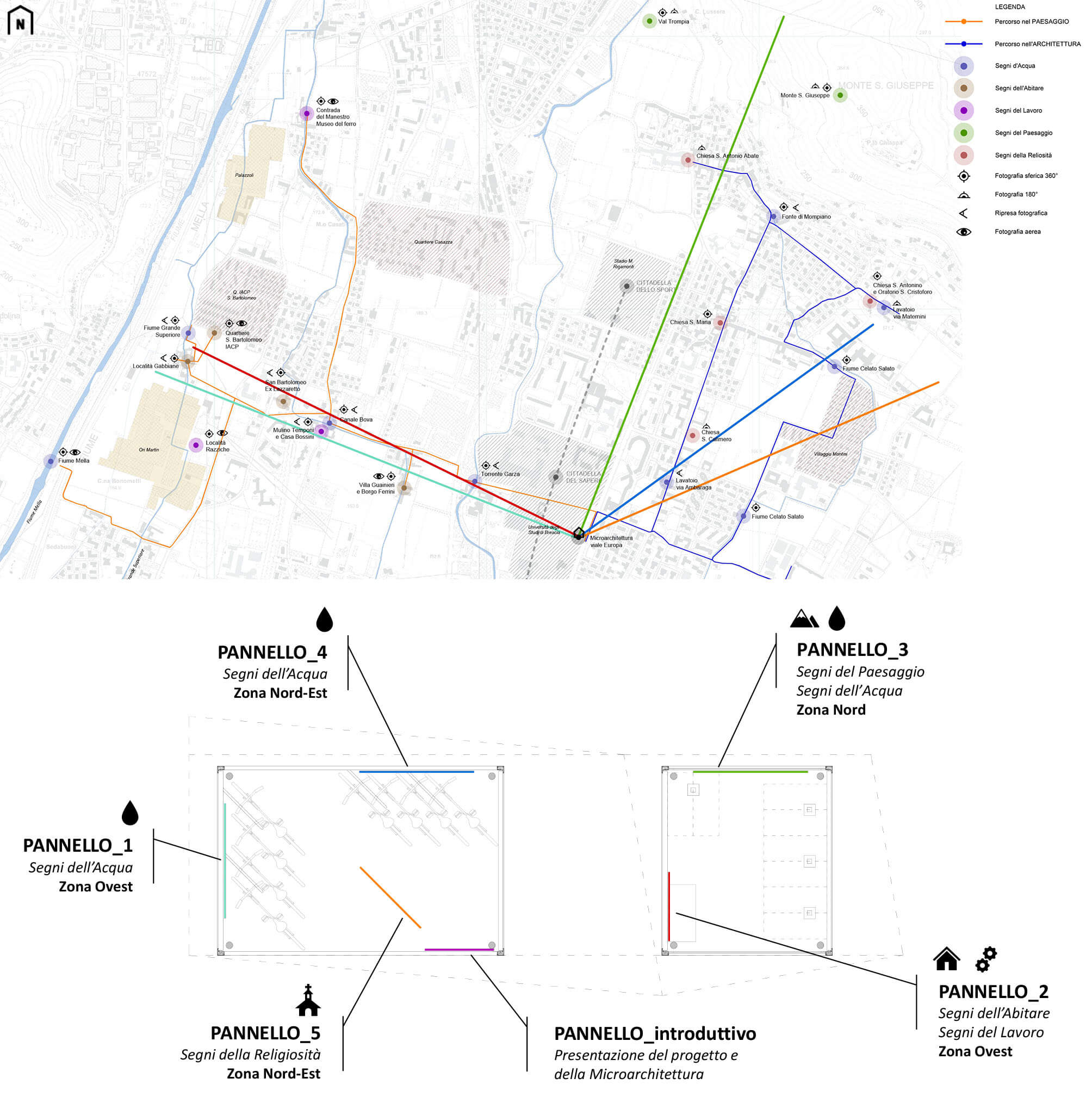
Between 2020 and 2023 thanks to the activities of the research group composed of Olivia Longo and Ivana Passamani as scientific leaders, and Virginia Sgobba and Davide Sigurtà, two prototypes of Microarchitectures containing cultural-informative functions with different proposals for Itineraries in the surrounding area, and of service to the local public and tourists, with particular regard to sustainable mobility, thanks to charging stations for bicycles and scooters powered by photovoltaic panels.
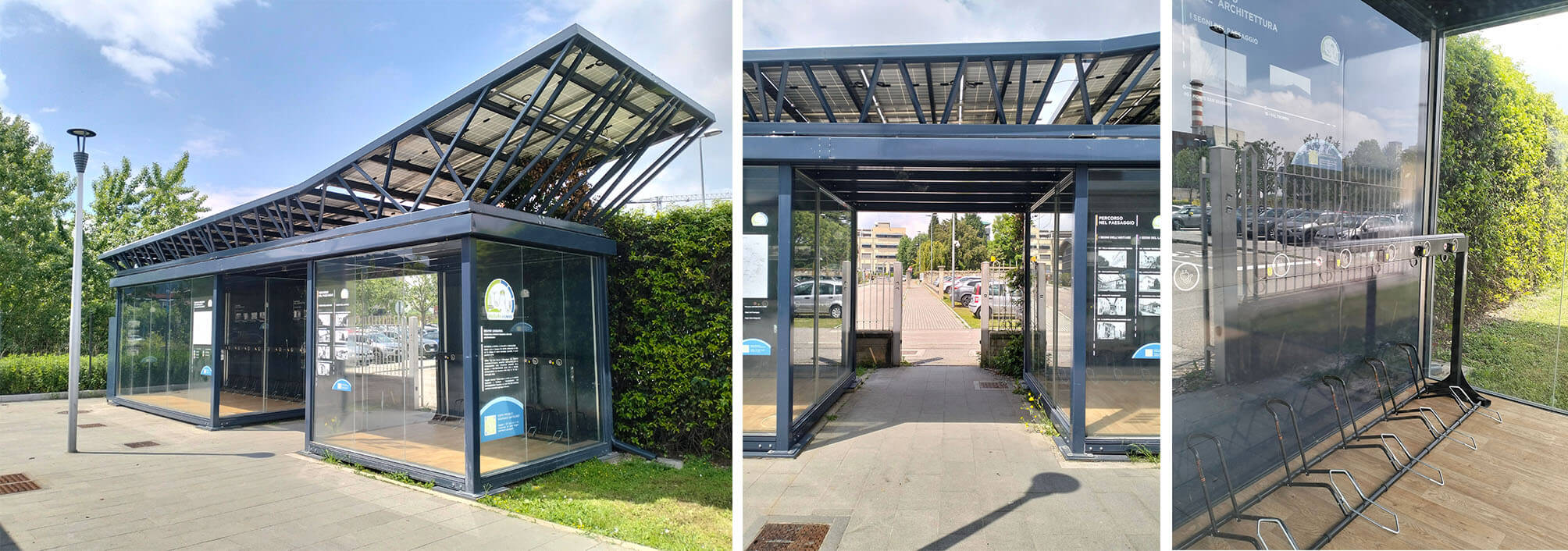
This scientific activity was part of the University of Brescia’s three-year project “Infrastructure and Services for Sustainable and Resilient Mobility – MOSORE@Unibs.” Lead partner: University of Brescia, scientific referee Prof. Giovanni Plizzari. The MOSORE project responded to the Lombardy Region’s “Call for Research and Innovation Hubs,” for strategic research, development and innovation projects aimed at strengthening Lombardy’s research and innovation ecosystems as hubs of international relevance (in implementation of DGR no. 727 of 5/11/2018).
Specifically, the Microarchitectures project was part of the research theme Action A.5 “User Service Infrastructure for Sustainable Mobility,” for the architectural and urban design of microarchitectures that had the following sub-actions: A5.2 Microarchitectures and services for accessibility and land use enhancement and A5.4 Infrastructure for weak and vulnerable projects.
In conclusion, the research activities conducted over the years have made it possible to test and refine innovative methodologies, which have led to the creation of proposals for multisensory reading, visual accessibility and tactile transposition of landscape, urban and architectural content.
The results of these studies have resulted in a range of products designed to overcome traditional barriers: from microarchitectures declined in various solutions to tactile panels and the multisensory tables that foster a direct and engaging learning and fruition experience. Each innovation is designed to facilitate understanding and perception, offering users the opportunity to “read” and “feel” culture in new, different, and inclusive ways.
Our mission is based on clear and shared goals that guide our every activity and project. We want to increase the culture of inclusiveness, making the concept of belonging and participation an integral part of daily life. Our intent is to communicating and sharing knowledge, adopting inclusive and multisensory languages that meet the needs of an increasingly diverse society. We aim to guarantee the right of every individual to access to culture, breaking down barriers that limit the enjoyment of aesthetic and historical values.
Our main goals are:
- Increasing the culture of inclusiveness: Spreading practices and methodologies that value diversity and promote inclusion.
- Making the concept of inclusiveness an integral part of everyday living: Integrating technological and methodological solutions into educational and cultural contexts.
- Communicating and sharing knowledge: Adopting and applying inclusive and multisensory languages to facilitate understanding of the products offered.
- Ensuring everyone’s right to access culture: Removing physical and conceptual barriers through innovative and adaptable tools.
- Fostering the transmission of cultural expressions: Celebrating the beauty of our heritage and making it easily readable and perceivable by every individual.
Through our experience and constant commitment to research, we stand as a bridge between academia and society, offering solutions that transform the enjoyment of culture into an inclusive and multisensory experience. Our story is one of a journey of innovation, dedication and passion, which continues to evolve to embrace new challenges and opportunities, always maintaining a firm commitment to a world where culture is an accessible asset for all.