


The “Everything Makes Sense” project introduces tactile and visuo-tactile panels to make spaces and works of the Brescia Diocesan Museum accessible through Design for All.
In 2024, the research contract “Everything Makes Sense. Representation methodologies for museum and artwork accessibility,” signed between the Diocesan Museum of Brescia Foundation and the DICATAM Department of the University of Brescia, under the scientific responsibility of Ivana Passamani.
The project was born with a specific goal: to make the artistic and architectural heritage of the Museum more accessible, understandable and inclusive, through tactile and visuo-tactile representation methodologies.
Preliminary study of the monument complex
The first phase of the work focused on the architectural analysis of the monumental complex that houses the Diocesan Museum.
This study made it possible to produce comprehensive documentation from the point of view:
- formal,
- distribution,
- space.
From this analysis, the following were realized:
- Two tactile maps with floor plans of levels +1 and -1;
- a dedicated touch table on the ground floor, which integrates a 3D model of the building, much appreciated by visitors;
- a visual-tactile skyline panel, useful for contextualizing the museum in the dense urban fabric of Brescia’s historic center.
These tools enable everyone-including people with visual impairments-to navigate the museum’s spaces and understand its structure.
Thirteen works told through visuo-tactile storytelling
A central part of the project was devoted to the artistic content of the museum. The research team developed the visuo-tactile narrative of thirteen selected works within the collection.
The works were translated into a coordinated system of tactile panels, designed according to the principles of Design for All, with the aim of communicating:
- the story told by the painting,
- the emotions conveyed,
- symbolic values,
- The most significant formal elements.
Preliminary critical readings of each painting identified the most representative figures and details, those that condense the work’s deeper meaning.
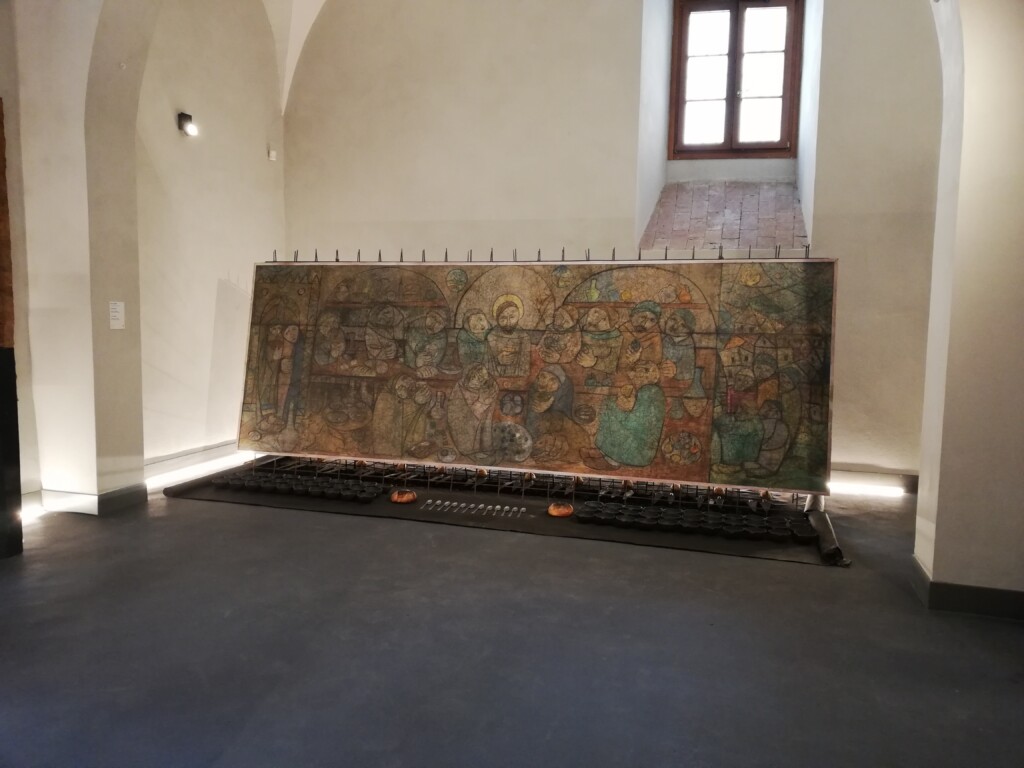
The Last Supper - Franca Ghitti
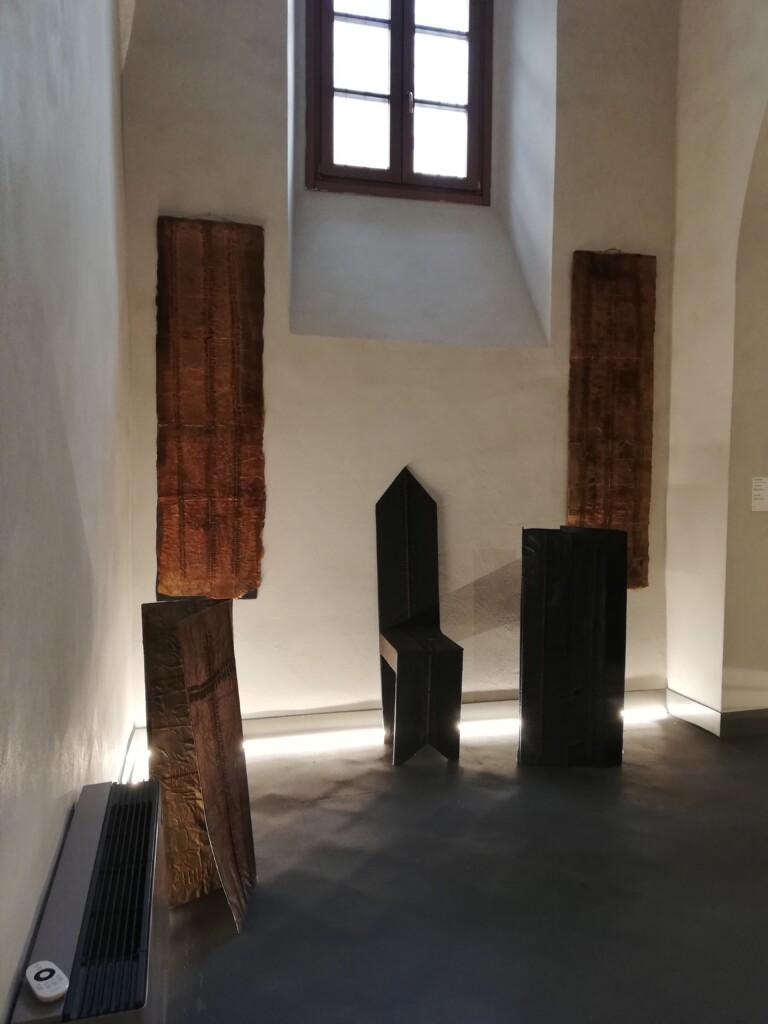
Other Alphabets - Franca Ghitti
The tactile panel dedicated to the Ghitti Room
As a complement to the previous accessibility project, Citislab also developed the floor plan of the panel dedicated to the Ghitti Hall, which was published as a stand-alone project. This space in the Diocesan Museum presents a particular complexity in terms of both space and content, as it houses an installation by Franca Ghitti conceived in close relation to the architecture of the room. The artistic intervention, of a site-specific nature, is composed of three works: The Last Supper and two works belonging to the series Other Alphabets.
The tactile map is designed to restore the structure of the hall and the relationship between the works and the space that hosts them, offering a clear reading of the spatial relationships, paths and positions of the installations. Through a calibrated visual-tactile representation, the panel enables visitors-including people with visual impairments-to understand not only the physical arrangement of the works, but also their dialogue with each other and their deep connection with the place. In this way, tactile mediation becomes an essential tool for interpreting a complex exhibition environment in which the artwork and architectural space form a single narrative system.
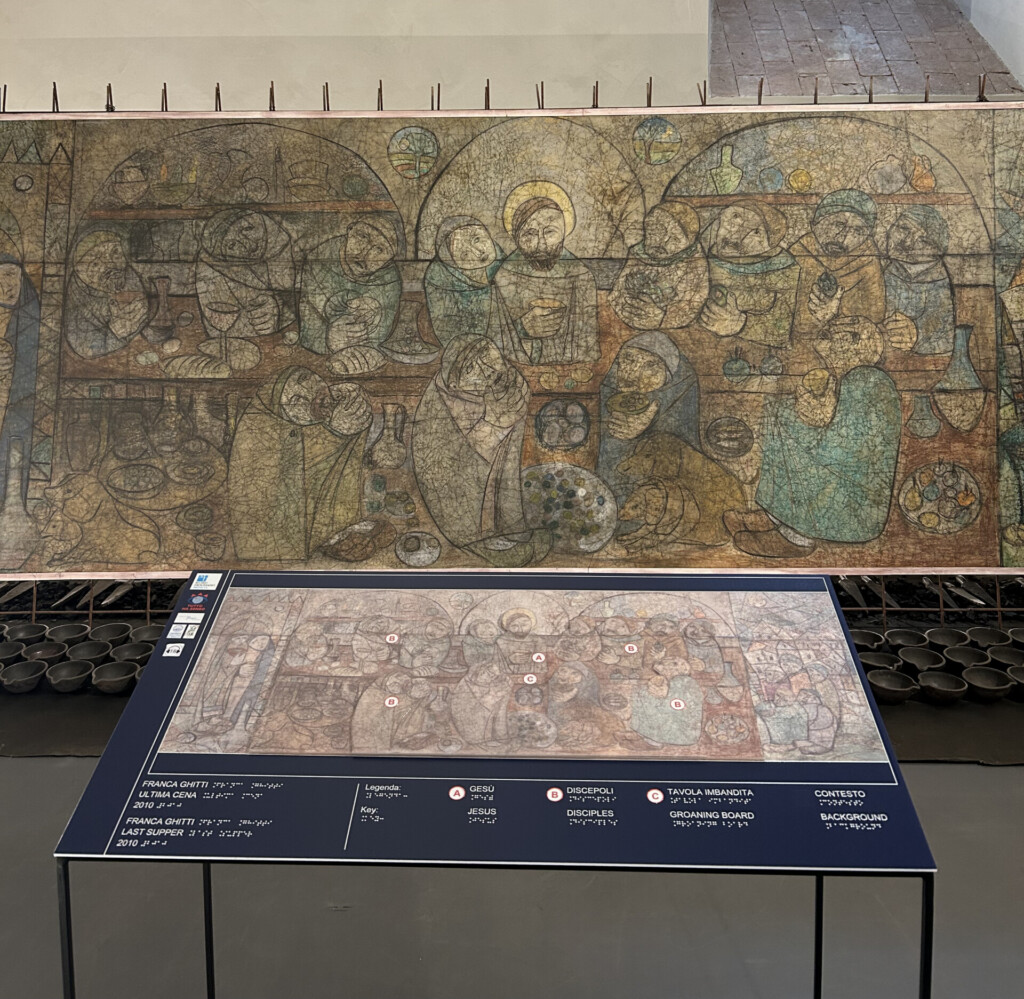
Tactile panel of the work The Last Supper by Franca Ghitti
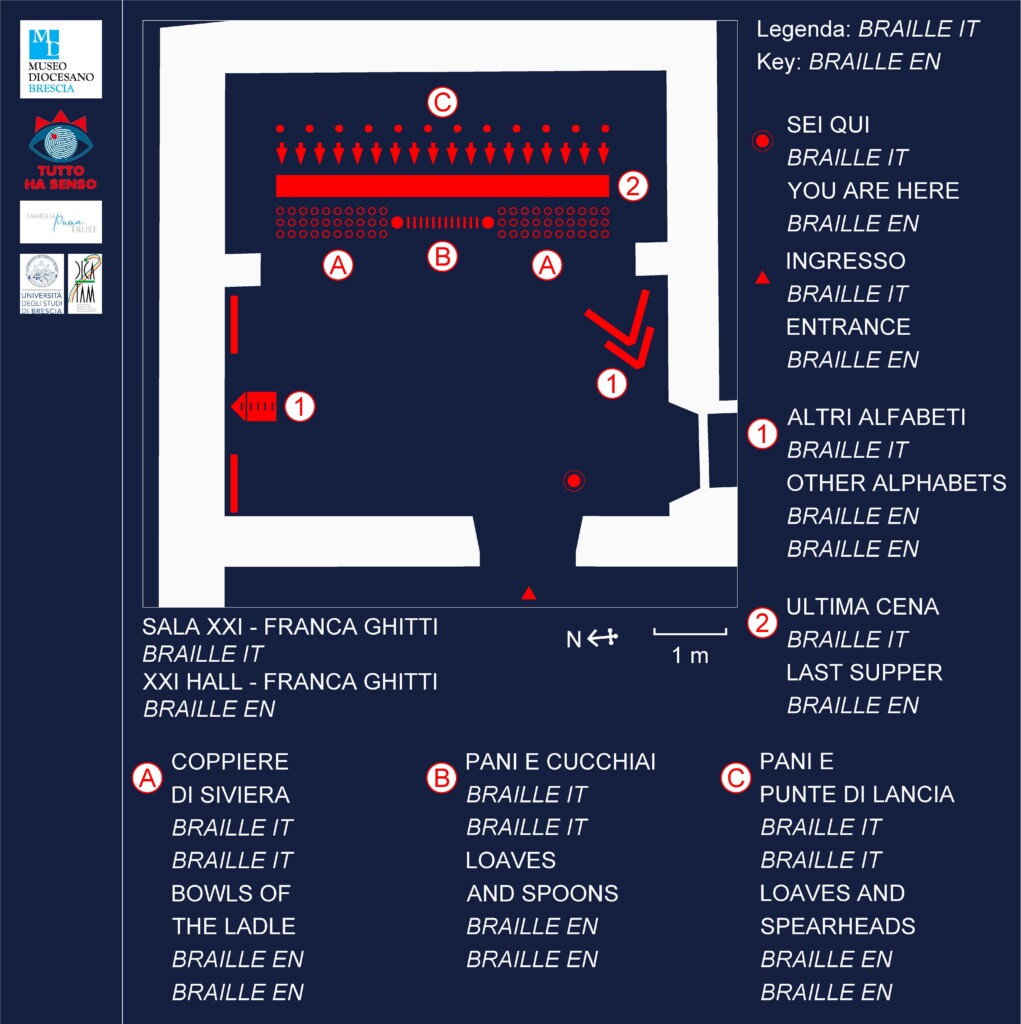
The design of the tactile map of the Ghitti Room at the Brescia Diocesan Museum.
A step forward for accessibility and cultural outreach
“Everything Makes Sense” demonstrates how university research can make a concrete contribution to accessible cultural mediation.
Thanks to new tactile and visuo-tactile panels, the Diocesan Museum of Brescia takes an important step toward a more
- inclusive,
- participatory,
- sensorially rich,
- geared toward understanding by diverse audiences.
A virtuous example of how tactile technologies can expand the enjoyment of art, transforming the museum experience into a narrative to be explored with the eyes, hands and imagination.