Salta il carosello
  • evidence
    The value of knowledge

    CITISLAB recognizes the value of knowledge for human growth

    Find out more
  • CITISLAB aims to facilitate the inclusion and autonomy of anyone in spaces and among people
    CITISLAB promotes inclusion and autonomy.

    CITISLAB aims to facilitate the inclusion and autonomy of anyone in spaces and among people

    Find out more
  • CITISLAB fosters a shift from the concept of disability as a problem to disability as a status
    CITISLAB promotes inclusion and autonomy.

    CITISLAB fosters a shift from the concept of disability as a problem to disability as a status

    Find out more
  • CITISLAB recognizes the value of knowledge for human growth – Find out more: https://citislab.it/en/history/
  • CITISLAB aims to facilitate the inclusion and autonomy of anyone in spaces and among people – Find out more: https://citislab.it/en/history/
  • CITISLAB fosters a shift from the concept of disability as a problem to disability as a status – Find out more: https://citislab.it/en/history/

OUR BRAND

Inclusive communication is so from the visual identity and accessibility of the site

The trademark is based on the combination of the acronym CITIS, a summary of the motto Communicating Sensory ITIneraries shown on the right of the logo, and the abbreviation LAB for Laboratory, also proposed in the Braille alphabet. The font chosen is linear and without graces, to respect the readability of which CITISLAB is a promoter.
The contrast between the two colors chosen ensures thevisual accessibility for the visually impaired.

Citislab's brand
Citislab's brand

WHO WE ARE.

People & synergies to realize ideas

CITISLAB is based on the expertise of the founding members, ranging from Design to Design to the focus Diversity & Inclusion, to which the complementary and necessary skills of other partners are synergistically integrated.
We share the idea that theaccessibility to cultural content is a universal right.
The research activities carried out in theUniversity of Brescia by Ivana Passamani and Olivia Longo and the experiences of Daniela Fiordalisi, concretized in proposals for multisensory reading, visual accessibility and tactile transposition of cultural contents, are made available to civil society.

About Us - Citislab Brescia, the Team
What we do at Citislab

What we do

Our products & services

We close our eyes and try to understand our surroundings.
Excluding sight can turn on other senses, particularly touch, which transmits information, becoming a sensory bridge between the body and the outside world.
Based on this assumption, we aim for maximum accessibility in the communication of cultural and environmental heritage.
We propose products (tactile maps, tactile tables, microarchitectures) accompanied by texts in plain and Braille alphabet and integrated with technologies. Our products can compose with each other to make tactile and multisensory pathways that offer multisensory experiences suitable for all users.
We reject the distinction between communication normally understood and communication for people with a sensory or cognitive disability. Accessibility to culture must be ensured with microarchitectures and installations, such as the tactile sensory panels, which everyone can enjoy.

Our turnkey service
Our turnkey service

HOW WE WORK.

A turnkey service

How do we work.
We follow the delivery from the client’s first request to the actual installation of our products, leveraging each of our expertise in architecture, accessibility, inclusiveness, sustainability and ensuring workmanlike execution.
These are our actions:

Listening to clients’ needs and constant discussion through online and in-person meetings in order to establish a constructive dialogue.

Learn more

Inspections with data collection, in order to know the needs of the client and the peculiarities of the places. Acquisition of existing graphic materials and/or survey and investigation activities (in collaboration with the University of Brescia – Dicatam). Feasibility study and related estimate.

Learn more

Inclusively declined graphic transpositions. Realization of products and services. On-site installation with final testing. Possible maintenance.

Learn more

Solutions

Our Accessible Solutions

With our inclusive communication proposals we respond to Article 3 of the Constitution “All citizens have equal social dignity and are equal before the law without distinction of sex, race, language, religion, political opinion, personal and social conditions.” Our solutions are divided into:

  • tactile realizations, i.e., tactile panels and tables designed to be seen, touched, but most importantly perceived. We propose a sensory experience by inviting users to turn on their senses, to be transported on a visual, auditory, tactile and olfactory journey;
  • microarchitectures, structures based on standard modularity designed to adapt in size and materials to heterogeneous environments ensuring that the user is involved in an immersive space in which to find his or her own perceptual experience.

Sensory itineraries

Inclusive and Immersive Pathways

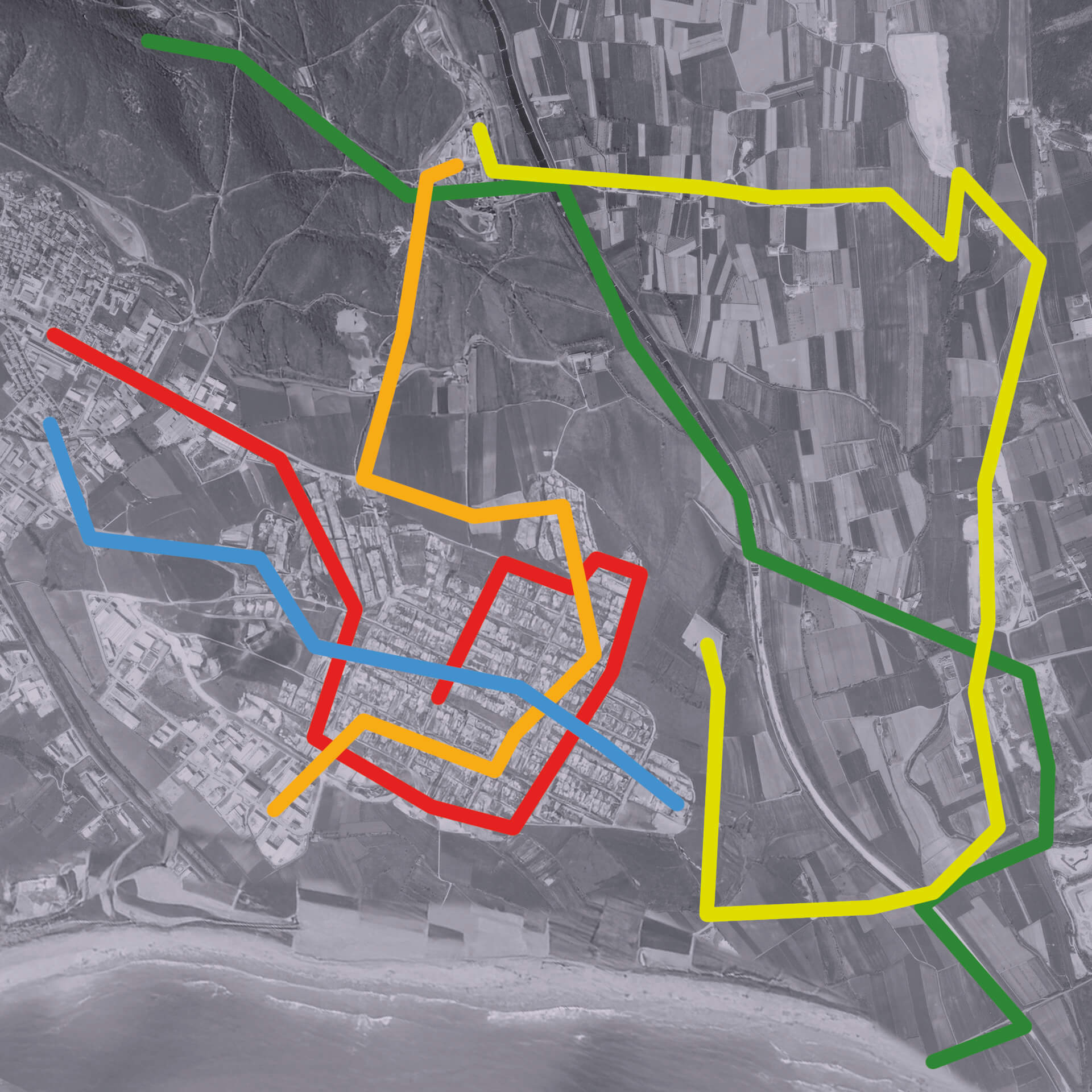
Black-and-white satellite map of a coastal town with five sensory routes: red quadrangle in the old town, orange inner ring, blue west-to-east trail, green hillside trail, and rural yellow loop to the coast.
Conceptual diagram of the five routes in their relationship to a site.

Sensory visit itineraries enable the inclusive usability of a site’s spaces and content and are designed from the principles of Design for All by integrating all of CITISLAB’s products and technologies: they compose microarchitectures, advanced sensory technologies, tactile architectural models, and immersive experiences to transform a landscape site, monumental architecture, hamlet, park, or museum into an experience free of physical and sensory barriers, accessible to all, unique, and engaging.
We have identified five types of itineraries, designed to make places and knowledge accessible and usable.

Combined solutions for a path of accessibility and inclusiveness “for All” within landscape settings such as: cemeteries, protected areas, archaeological and botanical parks, resorts and tourist villages, and more generally places characterized by views and panoramas.

Combined solutions for a path of accessibility and inclusiveness “for All” within urban spaces, with functional proposals for historic centers and suburban neighborhoods, historic villages, etc.

Combined solutions for a pathway of accessibility and cultural inclusiveness “for All” within historical areas and edifications such as: archaeological areas, castles, monumental edifices, noble villas and mansions, theaters, etc.

Combined solutions for a path of accessibility and cultural inclusiveness “for All” within permanent and temporary exhibition spaces such as: exhibitions, museums and art galleries, technology museums, thematic museums, etc.

Combined solutions for a pathway to accessibility and cultural inclusiveness “for All” within sites with specialized functions such as: exhibition fields, event spaces, airports, train stations, public edifices such as hospitals, schools, universities, etc.

For wider enjoyment

Implementable technology services

In all of our products, particularly in Tactile Panels and Tactile Tables, we offer the possibility of implementing communication by making use of tools and technologies that expand accessibility and enrich the sensory experience of visitors.
While all our touch panels and touch tables are always equipped with the QRcode for content implementation, we also provide optional tools and technologies to be added according to customer requirements.
Some technologies, such as those based on the use of Beacons, bring benefits not only from the perspective of the user but also from the perspective of those who have to manage a visitable reality.

Synergies for Sharing

Collaborations

CITISLAB was born with a strongly ethical vision that has been shared from the beginning with major associations such as the UICI Unione Italiana dei Ciechi e degli Ipovedenti – ETS-APS and such as the ENS Ente Nazionale Sordi.

We have further strengthened our partnership with the Brescia UICI and initiated one with the Brescia ENS office. Both have endorsed and supported this project, offering valuable advice and their active contribution.
These are our partnerships:

Italian Library for the Blind “Regina Margherita” of Monza

UICI – Italian Union of the Blind and Visually Impaired – ETS-APS of Brescia

ENS – National Board for the Deaf of Brescia

Citislab's collaborations

Synergies to INNOVATE

Partnership

CITISLAB has placed and will continue to place great emphasis on the selection of companies with which to establish a production partnership in order to ensure quality and sustainability of the products offered.
The companies were selected in relation to the types of products and services identified: making panels with additive or subtractive technologies, printing three-dimensional models with 3D printers, building microarchitectures, preparing media, providing interactive technologies and offering apps.