Touch Panels: a sensory experience
to access knowledge

The Tactile Panels are intended for all visitors.

Landscapes, cities, architecture, works of art, and material values are constantly available for the pleasure and cultural enrichment of those who have no impediments in their enjoyment. Landscape and cultural values, however, need to be communicated to all in order to be understood, appreciated, experienced, preventing certain disabilities discriminate against the possibility of knowledge, which must be a right for every human being.

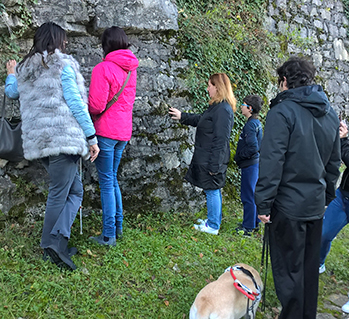
Image of an inspection with the UICI of Brescia. Touching the walls to understand.
Site visit with the UICI of Brescia to tactfully explore the walls.

Our goals

Goals and vision of CITISLAB

Convinced of this, CITISLAB develops proposals for products for the inclusive communication by cultural contentIn fact, it recognizes the irreplaceable and indispensable value of the knowledge For the growth of human beings, for their enhancement in society, to foster theinsertion and theautonomy of anyone in spaces and among people, to encourage a shift from the concept of disability as a problem toward that of disability as a status for which strategies and interventions can be identified.
Accordingly, the main objective of CITISLAB is to. communicate and make accessible knowledge by adopting and applying, in all proposed solutions, inclusive and multisensory.
L’accessibility must in fact be guaranteed with tools and content for all, operating in such a way as not to create communication channels that exclude and categorize rather than include.
It makes no sense to divide users into types and categories in relation to their abilities: Universal Design requires abandoning the dichotomy design for standard – design for disability, which produces different ways of designing by categorizing users.

Our Tactile Panels

Types of tactile panels

In light of these beliefs, CITISLAB makes several types of Tactile Panels, all designed according to the principles of Design for All: products therefore always designed to be easily accessible, comfortable to use for each user, and capable of responding to the evolution of human diversity.
In order to respond to this evolutionary perspective, CITISLAB is constantly open to the possible transformation of already acquired solutions and can always give new answers, in terms of content and technology, thanks to its structure of Laboratory, in which constant advancement of know-how fostered by experimentation and testing activities with companies with which it has manufacturing partnerships is possible. The theme of advancing know-how aligns with the vision of the University of Brescia where it states that it “fosters the circulation of knowledge between research, the production system and society, to responsibly improve the quality of life and the well-being of people according to the principles of equity and social, institutional, economic and environmental sustainability in order to create a plural, inclusive, supportive community.”
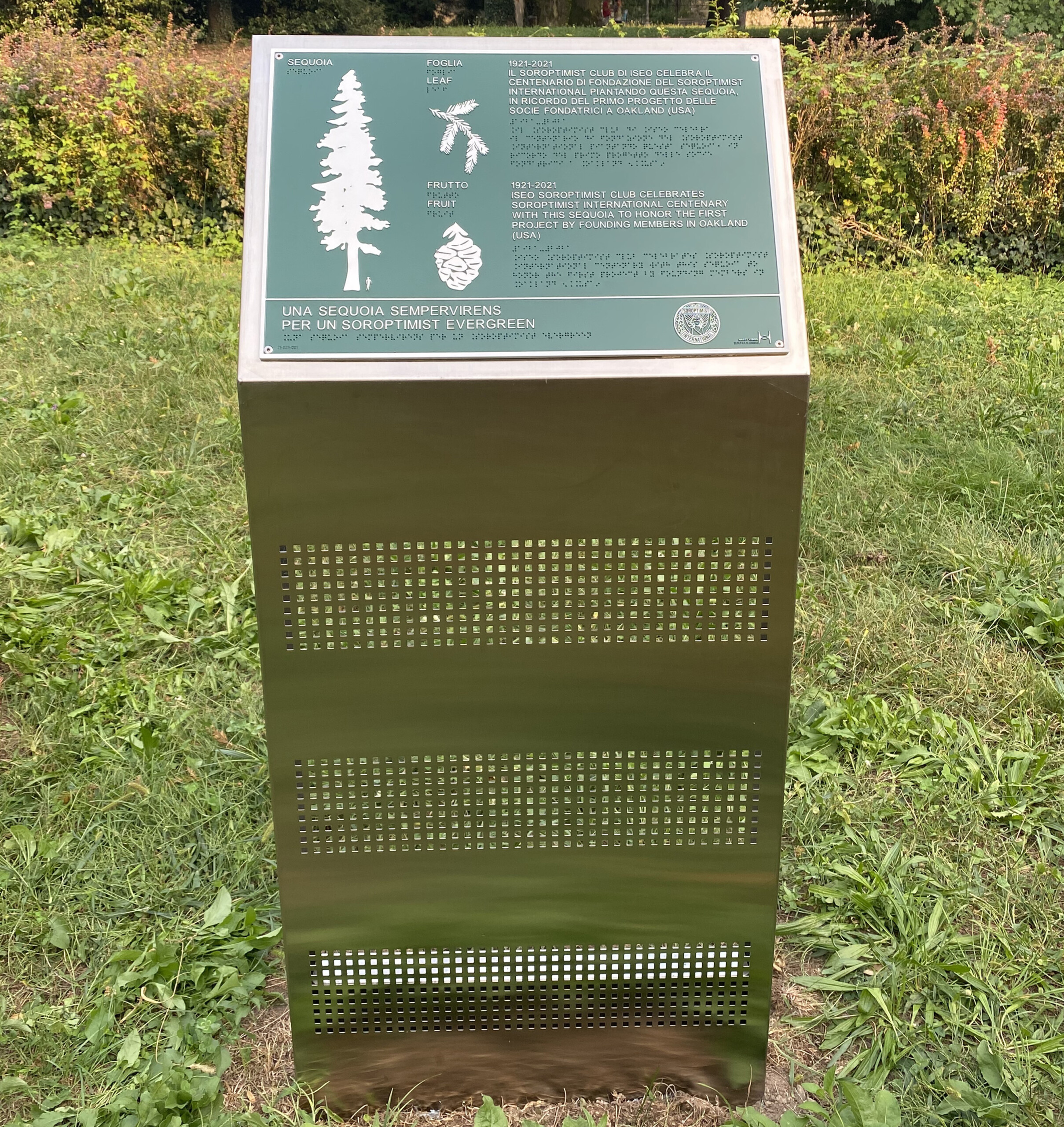
Tactile panels are one of CITISLAB’s flagship products and are the main elements of content transmission by allowing the tactile transposition of landscapes, architecture and works of art. They are made through panels that are installed on stands in which the floor lectern has a 30° tilt to allow easy reading and a lower edge height of 95 cm from the ground.
Tactile panels make use of relief drawing to describe the subject to be depicted. The tactile graphic transposition is achieved through the use of contrasting colors and different thicknesses in relief so as to deconstruct the image into its essential elements and allow all users, both visually and through touch, the possibility of investigating the individual parts of the subject to be understood, whether architectural (a floor plan, a building elevation) or artistic (such as a painting). The graphic or photographic representations, both of which are made legible by surfaces and raised graphic signs, are flanked by explanatory legends and short texts, if necessary also multilingual, in alphabetical characters, in plain and raised, as well as in the corresponding Braille code declinations.

In addition, to provide managers of monument settings and museum sites with additional tools for accessible and inclusive communication of values and content CITISLAB offers two interesting products in addition to Tactile Tables and Tactile Panels, Tactile Plaques and Tactile Boards.

Textual and graphic contents, declined in a visuotactile way become valuable knowledge support tools for people with multiple and diverse characteristics, abilities and needs.
CITISLAB proposes different types of tactile panels, which can give a concrete answer to differentiated demands of the client, both in terms of the type of context (outdoor or indoor places) and in terms of the subject and content to be communicated.

Tactile Landscape Panel
Concept of Tactile Landscape Panel

The preferred location of this type of panels are viewpoints, scenic terraces or elevated places from which landscape views and skylines can be appreciated. Through the use of digitally manipulated panoramic photographs, the tactile transposition of the skyline visible from panoramic viewpoints in the area is realized. Through raised lines and symbols, elements and points of interest in the landscape visible from that specific vantage point are highlighted and documented.

It represents the ideal tool for the tactile planimetric transposition of cities, urban sectors, ancient hamlets, historic centers or parts of them through the relief drawing of floor plans that may possibly be accompanied by particularly significant elevations or sections. It is functional for explaining the characters of the urban layout of a site, for communicating the tour route by highlighting through symbols or textures the places of interest to enable visitor orientation. Relief drawing makes urban representation accessible to all, allowing intuitive rapport with the surrounding space and geo-referencing within it.

Concept of Urban Old Tactile Panel
Architecture Touch Panel
Architecture Touch Panel Concept

It is used to describe the visitor routes within a monumental building, museum or exhibition center by highlighting through symbols, lines and traces the places of interest and nomenclature of spaces as well as the horizontal and vertical distribution systems in order to allow the orientation of visitors, making them autonomous in their movements. This panel describes the various parts of a building through the tactile transposition of general floor plans, plans of the different floors, elevations, sections and detailed elements of particular value.

It is dedicated to the communication of topics related to theanimal universe, theplant universe , and scientific processes related to sustainability, facilitating the dissemination of their contents through relief drawings, sensory maps, Braille lettering and interactive technologies, and bas-reliefs that are a valuable tool for describing both animal and plant organisms and scientific processes related to sustainability, meteorology, and agriculture in a way that can be perceived by all.

Concept of Tactile Science Panel

This type of panel is particularly suitable for works of art such as portraits or simple formal compositions. Tactile transposition in these cases is achieved by synthetically redrawing the subject and identifying the main depth levels of the parts and objects depicted, with which different relief thicknesses, colors and textures are associated.

This type is particularly suitable for works of art that present articulated compositions characterized by the presence of numerous figures and a complex background. In this case, the identification of the main depth levels of the pictorial composition is applied by breaking down the photo into several maquettes of different thicknesses applied on the background photo. This results in a multilevel photo panel, on which lines, symbols, backgrounds and transparent relief textures are then intervened to describe shapes and details.

Tactile Photographic Opera Panel
Photographic Tactile Opera Panel Concept.
Tactile License Plate Panel
Concept of Tactile Panel

Among the solutions for communicating culture, we also propose the Tactile Plaque.
It represents the simplest way of conveying didactic information, which is always present inside museums and temporary exhibitions. The Tactile Plaque can take on the identity and expressive character of the individual exhibition site without losing sight of the ergonomic intentions of reading and control of visibility and legibility. It integrates and composes in the Museum Routes with the other accessible solutions to ensure the readability and usability of the works and is configured as an additional tool of inclusive communication of artistic values and content to alternate with the panels Formal Art Work and Photographic Art Work.

This grant is characterized by its small size (A3, A4 or A5 format) and its portability by the user during the visiting experience. The card is embossed on a backing that can be made of cardboard or plastic material or dibond and offers agile visual-tactile and textual content to support the individual museum room or the entire visiting experience. The user can then pick up the tactile cards within the exhibition halls, putting them away after use, or at the beginning of the tour route and return them after use.

Touch Card Panel
Concept of Touch Panel

Information

Read more

PANEL FEATURES

Panel Materials:
Plexiglas, Polycarbonate, Corian, Dibond, Wood, Aluminum, Acrylic, Stainless.

Panel Size:
can be made in standard sizes but large sizes (120×50 cm, 100×50 cm) or customized sizes are recommended for this type, to be evaluated.

  • Type A: 120 x 50 cm.
    Type B: 100 x 50 cm.
  • Type C: 70 x 50 cm.
  • Type D: 50 x 50 cm.
  • Type E: 60 x 40 cm.

Printing Technology:
Additive or Subtractive

Complies with regulations:
DPR 503/96, ADA, UNI 8207, ISO 17049

Tactile cards: they are A3, A4 or A5 in size. The materials used are: Cardboard, Plastic material, Dibond.

Tactile license plates: pcan be made in standard sizes (20×15 cm, 30×20, 40×20/25 cm) or upon request.

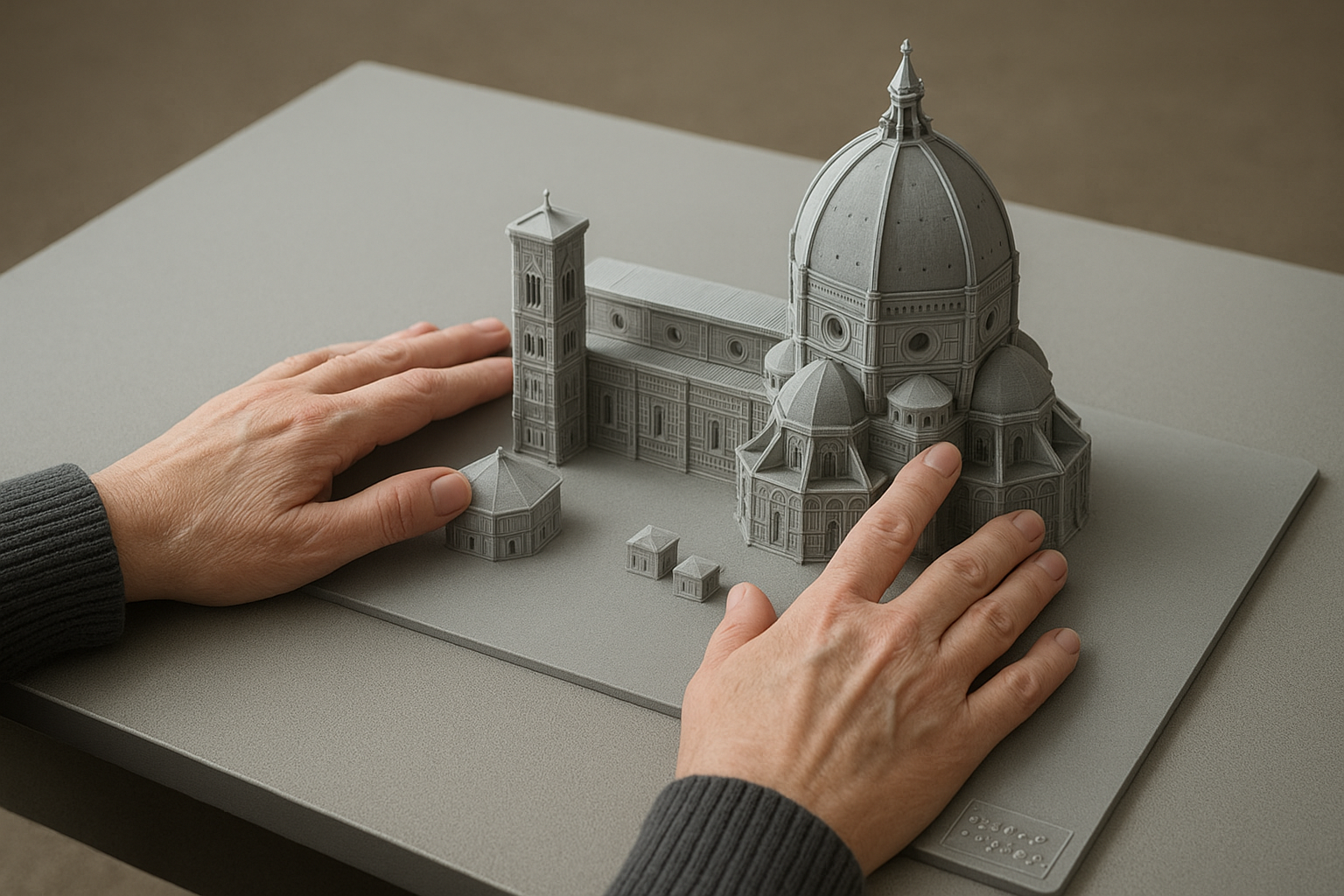
Three-dimensional Model of detail enhances the tactile experience

Logo simbolico di un modello tridimensionale di dettaglio

Low-relief reproductions of architectural or artistic details are essential tools for improvingaccessibility andsensory experience in all places such as museums and exhibition spaces, parks, monumental complexes, public buildings) where we want to communicate elements that are not easily reached or directly experienced by touch (animals or parts of them, elements of vegetation, architectural and decorative elements).
By integrating these bas-reliefs into the Tactile Panels and Tactile Tables, it is possible to offer visitors the opportunity to explore and understand, through the sense of touch, much more information and data geometric, volumetric, formal e proportional, relative to natural, artistic and architectural features.
These three-dimensional models thus make it easy to explore shapes, proportions and those details that would otherwise be difficult to access.

For example, the reproduction of a Corinthian capital (or semi-capitol) allows one to appreciate its intricate floral decorations, while a bas-relief of a part of a historic facade offers a tangible understanding of its stylistic features.
The integration of such reproductions into Tactile Panels and Tables not only facilitates theinclusion, but it enriches the museum experience for all visitors. The ability to touch and feel the elements creates deeper emotional and cognitive engagement, making the visit more interactive and memorable.
In addition, the use of different materials in the creation of bas-reliefs can simulate the original textures of what is offered, providing an even more realistic perception.
The combination of these reproductions with other technologies, such as audio descriptions or applications interactive, can further expand audience accessibility and engagement.

MEDIA CHARACTERISTICS

Panels can be installed on different types of structures made of shapes and materials to suit the context

  • Material Supports:
    Iron, Iron/Corten, Wood or Aluminum
  • Type Support:
    Inclined plane 30°


IMPLEMENTABLE INTERACTIVE TECHNOLOGIES

The panels are all equipped with QR Codes to download PDFs, voice descriptions, and Lis Videos in sign language for the deaf and to access additional in-depth content.

They can be implemented of technological services such as:

  • Web App for QR Code + NFC
  • Smart App for QR Codes + NFC + Beacons
  • Audio Descriptions
  • Immersive Audio Descriptions
  • LIS video
  • Olfactory Installations
  • Immersive Installations + AR