


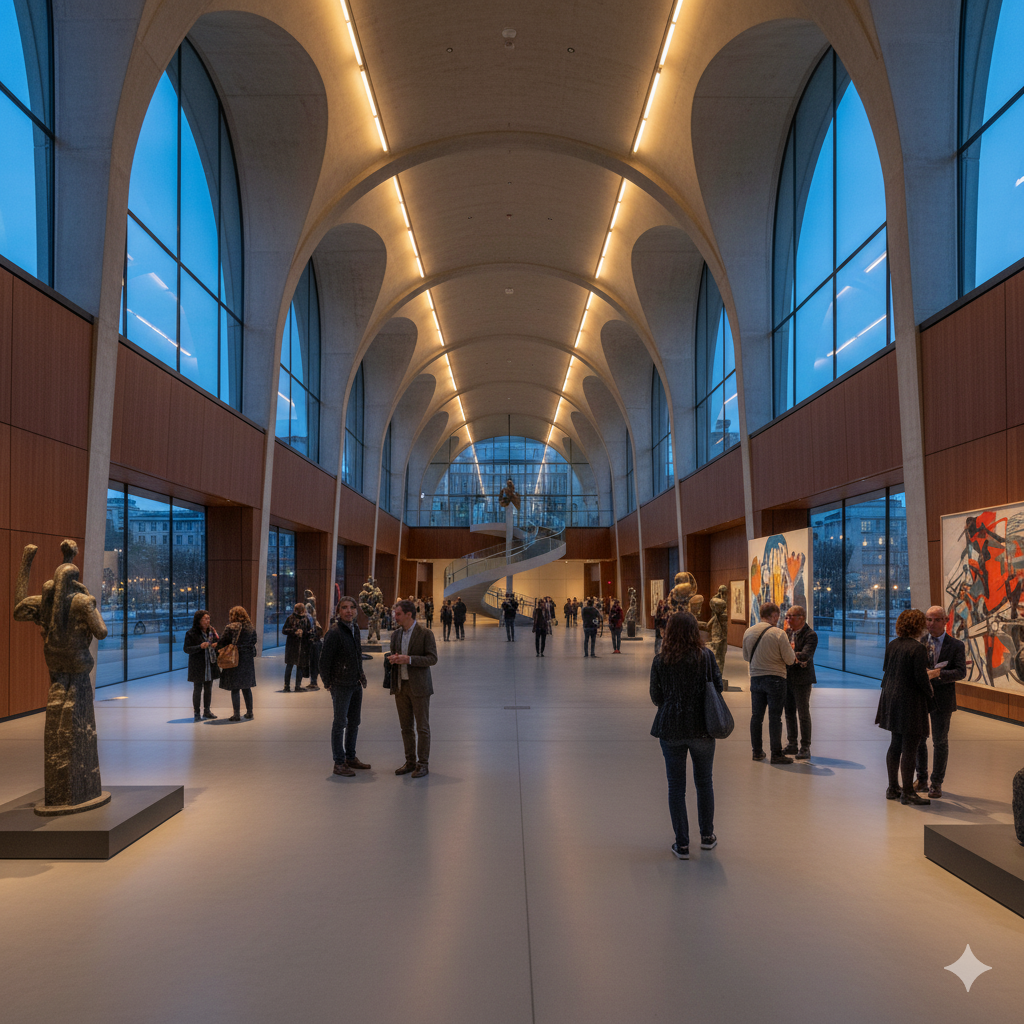
Accessibility to Paintings and Works of Art brings excitement and value to all
A Sensory Itinerary that cannot be missed for a vision such as ours is the one concerning the field ofArt.
The treasures kept and exhibited within the museums are untouchable for a whole series of shareable reasons related mainly (and not only) to security and preservation.
We have seen in recent decades an evolution in museum management: we constantly notice, for example, a greater attention to the visitors (also with a view toinclusiveness) and an openness to outside events and activities.
Very useful is the research activity of ICOM (International Council of Museums), which recently published “Key Concepts of Museology” aimed at bringing a broad audience closer to the terms of this science and their evolution over the years.
If the museum as an institution works with objects that form collections, its function is multifaceted: conservation, research, communication.
The communication activity includes theeducation and theexposure.
This activity relies on the nonverbal language of museum objects: visual language, which can sometimes become auditory and tactile.
L’Museum Itinerary is a widely applicable proposition: museums of all types and themes dot the global scenario and are adapting communication channels through the use of new technologies where interaction in most cases is visual: the Augmented Reality and the Virtual Tours testify to this.
Citislab’s products, declined from a multisensory perspective, are primarily aimed at enhancing the use of touch To flank or replace the view. The inscription No Touching, a recurring warning in Museums, is replaced with Forbidden not to Touch.
The Museum is the place aimed at the selection, study and display of material or intangible evidence of man and his environment.
The place and the heritage it houses, that is, the material or intangible objects to which the community has attributed a value of testimony and historical memory that deserve to be protected, preserved and enhanced, thus play an indispensable role in the process of cultural enrichment of a community.
This process needs an effective and efficient transmission of cultural values: culture is not an optional extra but a right for all visitors, regardless of physical or sensory or cognitive conditions: it is, of course, a matter of properly calibrating the modes of communication.
A Museum Itinerary can be understood in two ways.
The first case occurs if there are more than one institution with this purpose in the same town or village: in its broadest sense, the Itinerary could then be a route in an urban context cleverly structured to connect the different realities and then enter them. Very interesting, in this situation, to set up solutions that stimulate the discovery of the relationships between the buildings-museum, and between the buildings themselves and the surrounding context. Walking from one building to another can become an opportunity to learn about the urban context and the landscape surroundings.
The second case concerns an individual museum institution that sets up a museum itinerary to narrate the heritage it holds. Even in a situation like this, CITISLAB proposes to enrich the experience of museum heritage storytelling with lunges into the landscape, the views and vistas that can be enjoyed from museum rooms. The museum is not an impenetrable container but ani is a place that often holds evidence from the surrounding context…and with the context it must continue to dialogue.
The vision of CITISLAB is therefore to propose a visual-tactile dialogue of cross-references between container and content and also between container and its surroundings.
In summary, therefore, we can assume two scenarios in the proposal of a Museum Route:
- Museum itinerary of connection between different Museum Institutions (relationships between context and Museums and route within Museums)
- Museum itinerary on the individual museum (museum-context relations and internal museum route).
The first scenario involves a more challenging path. Here we can systematize our different Accessible Solutions, by composing types of Sustainable Microarchitectures (in that they are powered by photovoltaic and modular panels) such as Integrated Landscape or Tactile Totems, to be considered pivot points of the pathway, with the Tactile Realizations (Plaques, Tables and Panels)..
Micro-architecture can be installed at the beginning of the tour route in the town or village. Integrated Landscape to welcome visitors and provide an information and stopping point, as well as charging for devices. Here they can also be offered the opportunity to recharge their bicycles or scooters and present through one or more Tactile Panels the Itinerary in its articulation.
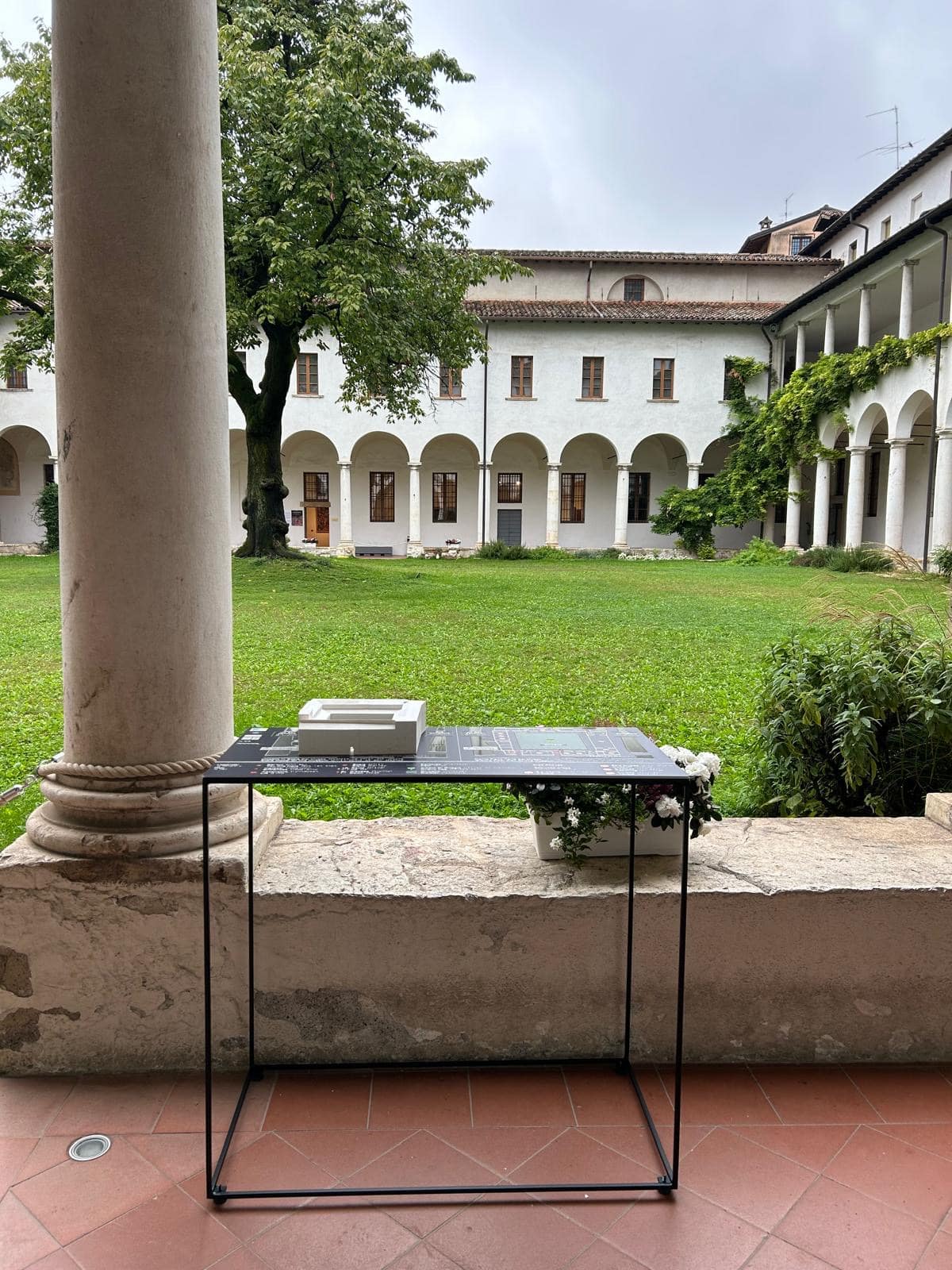
Within the Museum CITISLAB proposes, for both the first and second possible scenarios, a Tactile Totem or a Microarchitecture of reception, at which to download the Visiting App and explore an initial Tactile Table with the three-dimensional model of the museum building juxtaposed with the floor plan showing the visit route.
Tactile Panels and Tactile Tables will then be placed in the museum spaces, depending on the relevance of the works on display, to communicate in a visual-tactile way ii specific content about the different rooms and the works contained therein. The Tactile Plates will be able to offer a less in-depth level of information than the Tables or Panels, without sacrificing the total inclusiveness of visitors. Our Microarchitectures within which to propose thematic experiential moments could also be set up inside the Museum. Le experiential proposals and CITISLAB’s solutions are always characterized by a composition inclusive of the content and suggestions offered to the visitor, who must be enabled to enter into the real knowledge of the Museum, to feel that he or she is in a controllable space where he or she can move from one work to another to find our different solutions for the inclusive communication of the contents, guided by the support of interactive technologies (Beacons or NFC), which will provide through the dedicated App useful information about the Museum Itinerary, the cultural and formal values of the exhibited works, and the surrounding context, encouraging the acquisition of the contents through graphics and texts that are clear, brief, and explorable by all.
The main objective of a Museum Itinerary is to offer users support in first understanding the location and relationship between the city or village and the Museum Institutions. Secondly, once inside the Museum, CITISLAB proposes accessible solutions for guiding the visit, leaving ample room for freedom to delve into or not delve into the information about individual works. Some may stop at the more general level of information of the Tactile Plaque or the Tactile Panel, while others will choose to avail themselves of the QR Code or of Interactive Technologies to deepen exploration and acquire more information.

The Museum Itineraries however, have as their main focus the narrative of a Museum and are consequently placed within permanent and temporary exhibition spaces such as: Exhibitions, Museums and Art Galleries, Technology Museums, Thematic Museums, Ethnographic Museums, Industrial Archaeology sites (Mills, Forges, Sawmills, Power Plants) etc.
Combined solutions can then be adopted for a “for All” accessibility and inclusivity journey to transform a visit to a Museum or Exhibition into an experience free of physical and sensory barriers, accessible to all, unique and engaging.
This Museum Itinerary, starting from the UN Convention of 2006 on the rights of persons with disabilities, deploys a concrete strategy to facilitate conditions of accessibility e knowledge of all possible users.
Here visual stimuli are integrated with those derived from tactile perception, and further enriched by auditory stimuli: this results in amultisensory experience.
Indeed, it is essential that touch, a sense to be constantly educated, is always accompanied by precise audio or written descriptions that can guide the visitor in exploring the work. In this way, a bridge is created between multisensory perception and aesthetic understanding, and true inclusion is fostered’.
We believe that all visitors should be guaranteed opportunities for cultural enrichment and acquisition of aesthetic values.
Access to‘Art should be defined both as the possibility of access to the places where art is exhibited (eliminating the architectural barriers and by putting in place all arrangements for a physical accessibility), and also as the possibility of knowing and understanding works and artistic content in different ways, making accessible content for people with visual, hearing and cognitive disabilities.