


Tactile Panels and Tactile Tables are sensory solutions
The 2006 UN Convention on the Rights of Persons with Disabilities includes in the concept of disability, in addition to physical, mental, intellectual and sensory minorities. In this sense, therefore, the concept of architectural barrier referring to the motor disabled should be reconsidered as a perceptual, auditory and visual barrier when we consider precisely sensory disabilities.

CITISLAB’s Solutions.
CITISLAB – Tactile Realizations for Accessibility.
CITISLAB gives a response in this area, proposing Tactile Realizations to facilitate conditions of accessibility and knowledge for all possible users, who may have different abilities and varied levels of education and training.
To all users, the Tactile Realizations propose not only visual stimuli but stimuli derived from tactile perception, that is, from that sense that grants human beings the ability to detect with great precision the existence of stimuli that are activated by the contact of the skin surface with an external object.
For CITISLAB, proposing inclusive solutions (whether Tactile Realizations or Microarchitectures) means knowing and giving concrete form to concepts and terms that have arisen from the wide international debate and in-depth studies of the past decades. These have led to an increased focus oninclusiveness through the achievement of shared values, expressed in the meaning of the following terms:


Universal Design, Inclusive Design and Design for All: the pillars of accessibility
Universal Design
The term was introduced in 1985 by Ronald L. Mace who defined it as “the design of products and environments to be usable by all people, to the greatest extent possible, without the need for adaptation or specialized design.”
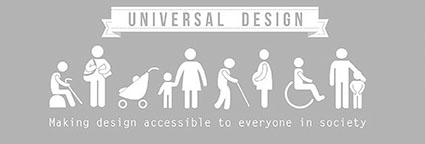
Universal Design Infographic
Subsequently, the seven principles of Universal Design were defined: of these principles, which support the design of spaces, products and communication by identifying guidelines to be followed, we are particularly interested in some of them:
- Equity (usable by all)
- Flexibility (adapting to different abilities)
- Simplicity (easy to understand use)
- Perceptibility (conveying actual sensory information)
- Physical exertion containment (use with minimal fatigue)
Inclusive Design
It is a particular design approach defined in 1994 by Roger Coleman and must ensure that products and services meet the needs of the widest possible audience, regardless of age or ability.
Design for All
It was defined in the European Institute for Design and the Disability in 2004 as the “design for human diversity, theinclusion social andequality“. According to this concept, in order to ensure equal opportunities for everyone to participate in various aspects of society, every designed object must be:
- Accessible
- Convenient for everyone to use
- Able to respond to the evolution of human diversity.
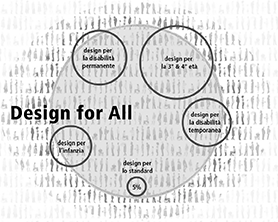
CITISLAB’s tactile products.
Touch Panels and Tactile Tables
CITISLAB in the production of tactile realizations takes due account of the above values and concepts and is divided into two different types of products, the Tactile Panels and the Tactile Tables.
The substantial difference between these two products, which are accumulated by the possibility of being perceived with the touch as well as with sight (and/or with any other senses, such as smell and hearing, becoming experiences multisensory), lies in the way they are explored and used, which in turn depends on their formal characteristics.
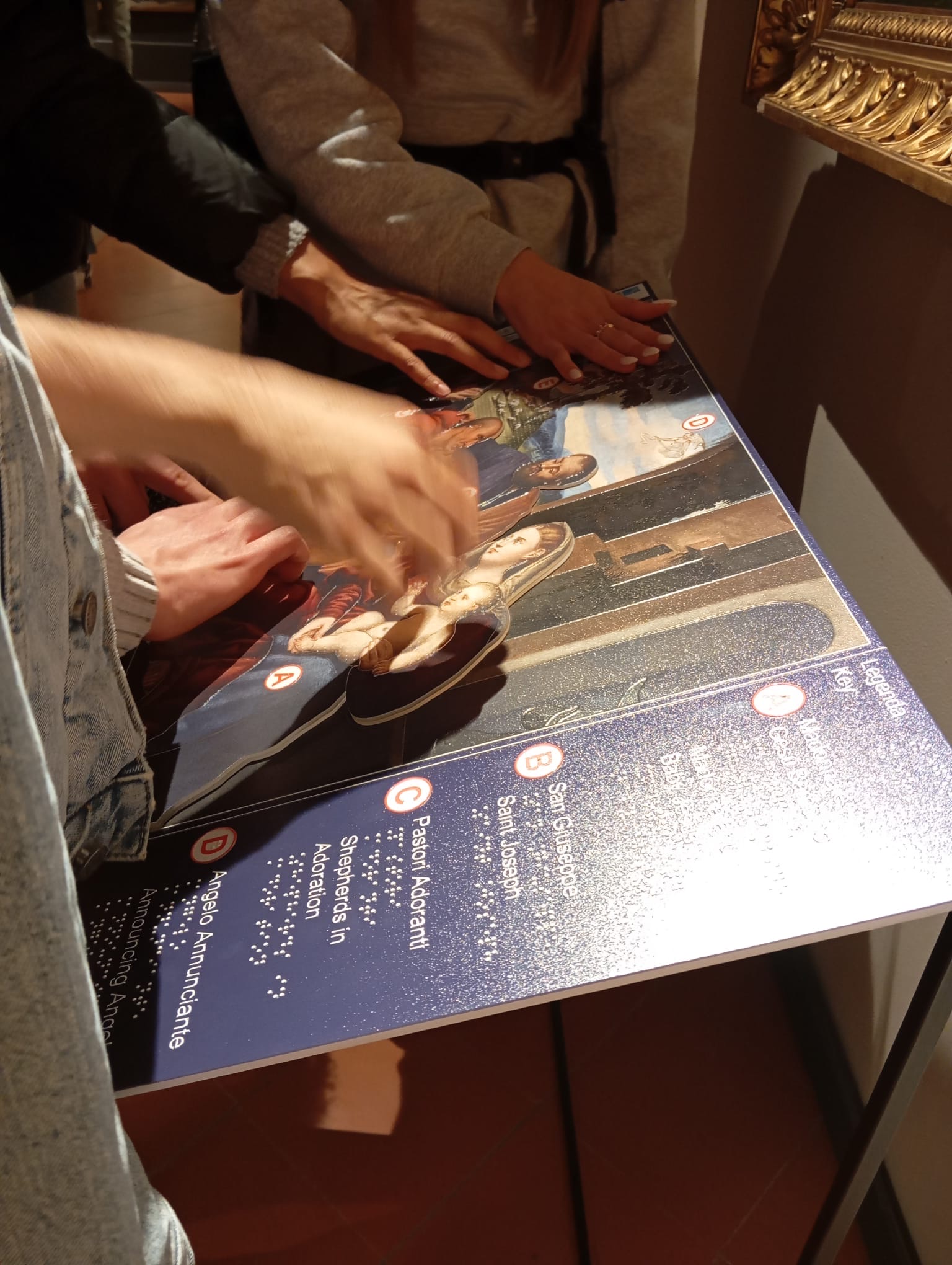
Touch Panels
The Tactile Panels are placed on lecterns inclined at 30° and require the user to stand in front of them in a frontal position. The sense of reading the raised drawings and lettering in plain and Braille relief Is therefore one-sided. Panels are therefore often leaned against a vertical wall.
Tactile Tables
The Tactile Tables accommodate a 3D model of the object to be communicated, flanked by explanatory lettering and legends in clear and raised Braille. Although the latter require one-way exploration, the 3D model resting on the table top can instead be explored by moving around the table itself, which can then also be placed in the center of a room.
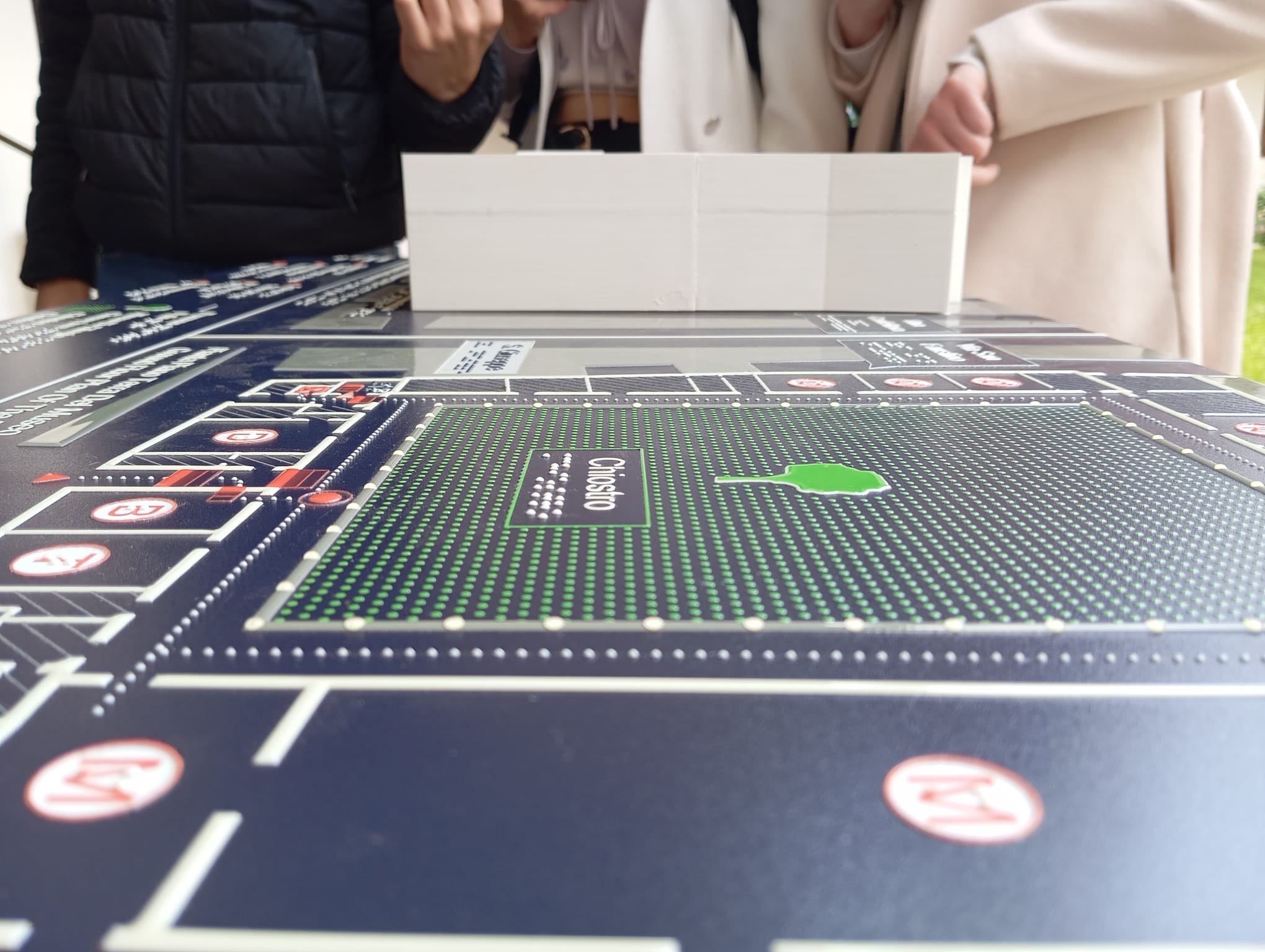
CITISLAB gives a response to Article 3 of the Constitution “All citizens have equal social dignity and are equal before the law without distinction of sex, race, language, religion, political opinion, personal and social conditions” through inclusive communication.
Among our solutions, tactile realizations are designed to be seen, touched, but most importantly, felt.
We propose asensory experience inviting users to turn on their senses, to be transported on a visual, auditory, tactile and olfactory journey.