Tactile tables: an inclusive and engaging experience

Tactile Tables invite exploration

Facing the exploration of a new space, architecture or artifacts is an experience as challenging as it is interesting for any user, who will be able to gain new experiences and new knowledge. If culture is a value, the acquisition of new data must be facilitated with communicative tools that are accessible to all users, preventing certain disabilities from reducing or even erasing the possibility of knowledge, which must be a right for every human being.
This conviction guides CITISLAB in developing proposals and products for inclusive communication of cultural content, but also in reflecting on the meaning and usefulness of different types of proposals.
Indeed, if our primary goal remains to communicate and make knowledge accessible using inclusive and multisensory languages, the range of products is articulated to ensure diverse uses by users.

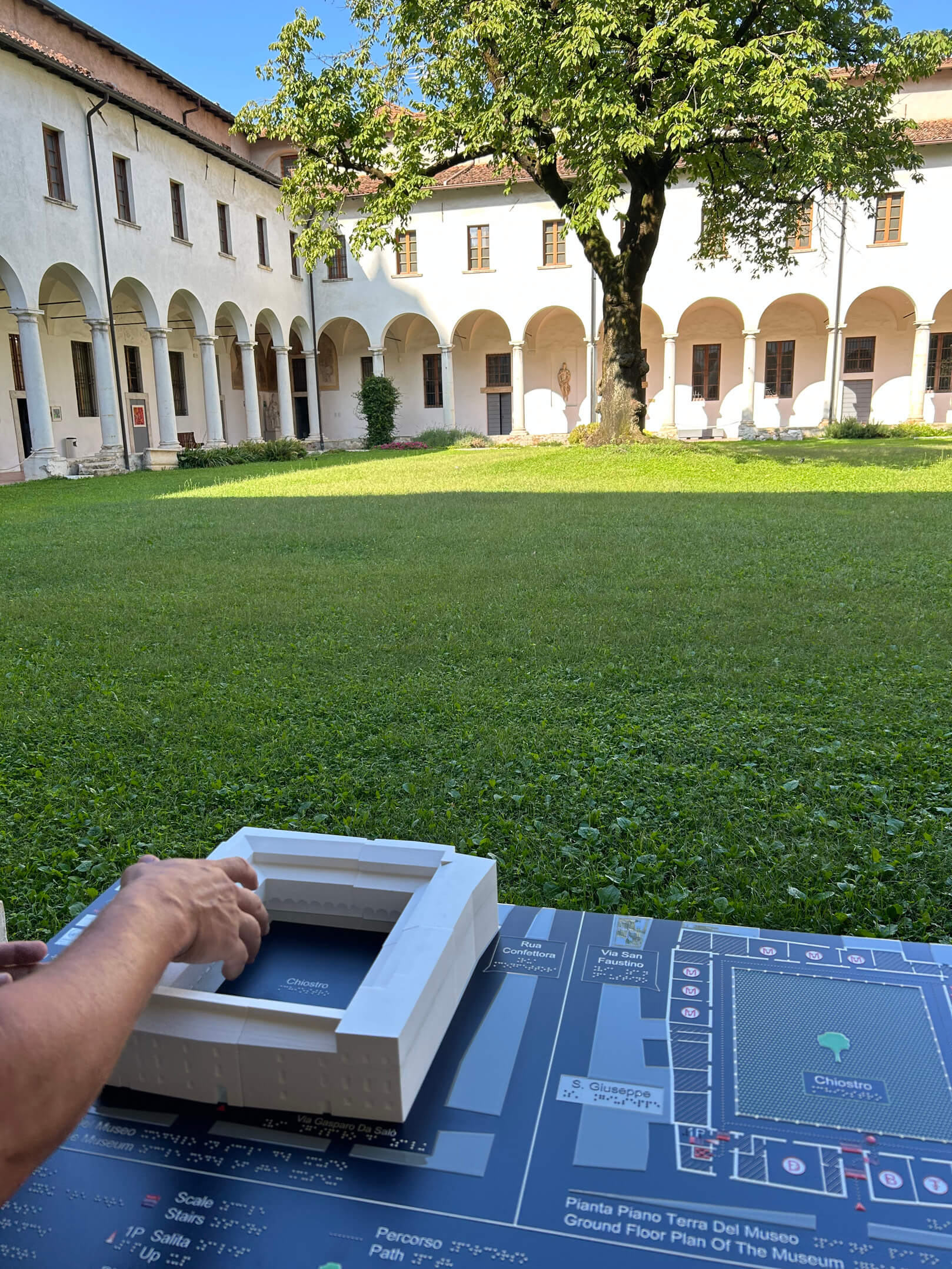
The three-dimensional model of the Brescia Diocesan Museum.

VOLUMES TO TOUCH

The Tactile Table integrates content with three-dimensional elements

Next to the different types of tactile panels, which remain CITISLAB’s flagship product, we therefore propose the “Tactile Table” product, which integrates the contents normally communicated by tactile panels with three-dimensional elements, to be explored with satisfaction and easily gaining insight into the morphology and volumes of a natural or urban landscape, a building or an architectural detail element. The simplicity of exploration is ensured by the very structure of the product: a touch panel placed on a flat stand, around which one can move freely to explore the reliefs present but especially the three-dimensional model resting on the panel.
This type of proposal fascinates any visitor, starting with children and school groups, and is obviously highly appreciated by those with visual impairments.
A three-dimensional model of a landscape makes up for the complete lack of information about the space in which it is located that a blind person may experience. Likewise, a three-dimensional model of a building allows for control of the space and facilitates orientation and movement within it. As for the three-dimensional rendering of an architectural detail, it is quite obvious that it can facilitate the understanding of valuable elements of historic architecture perhaps placed in unreachable positions, but at the same time it can communicate the form of an object, animal or plant element of which direct exploration is impossible.

Tactile Tables and Design for All

CITISLAB makes three different types of Tactile Tables, declined according to the principles of Design for All: products therefore always designed to be easily accessible, comfortable to use for each user, able to respond to the evolution of human diversity.
Combined with Tactile Panels, they are the main elements of content transmission allowing the tactile transposition of landscapes, architecture and details.
They consist of panels that are installed on supports and make use of relief drawing combined with three-dimensional models to describe the subject to be depicted. The tactile graphic transposition is achieved through the use of contrasting colors and different thicknesses in relief so as to deconstruct the image into its essential elements and allow all users, both visually and through touch, the possibility of investigating the individual parts of the subject to be understood, whether architectural in nature (a floor plan, a building elevation) or relating to the morphology of a landscape.
The three-dimensional model can be monochromatic or made with verisimilitude colors or even semi-transparent material, and can completely replace the relief design.

Tactile tables and technology integration

The contents of the Tactile Tables can be translated into guiding voices, light trails, other sensory accouterments that guide all users in exploring the model.
With such devices, these products become very valuable knowledge support tools for people with multiple and diverse characteristics, abilities, and needs.

Our Tactile Tables

Types of Tactile Tables

Through surveys and three-dimensional models, the morphology of a landscape, its natural and man-made elements are documented e the built-up area. Through raised lines and symbols, elements and points of interest in the the portion of the landscape represented.

Tactile Landscape Table
Concept of Tactile Landscape Table

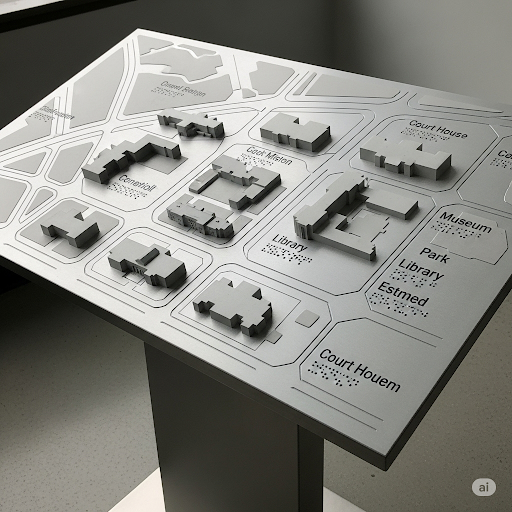
A three-dimensional representation of a city or historic town (or parts thereof), or of a neighborhood or square or urban subdivision is proposed using volumetric models placed on a tactile floor plan.

The Urban Tactile Table will then present the distinctive architectural elements of the documented space (churches, monuments, blocks, bridges and various artifacts) while through explorable surveys on the base plan, both linear signs such as roads and paths, rivers or canals, and areal signs such as squares and parks will be highlighted.

Urban Old Tactile Table

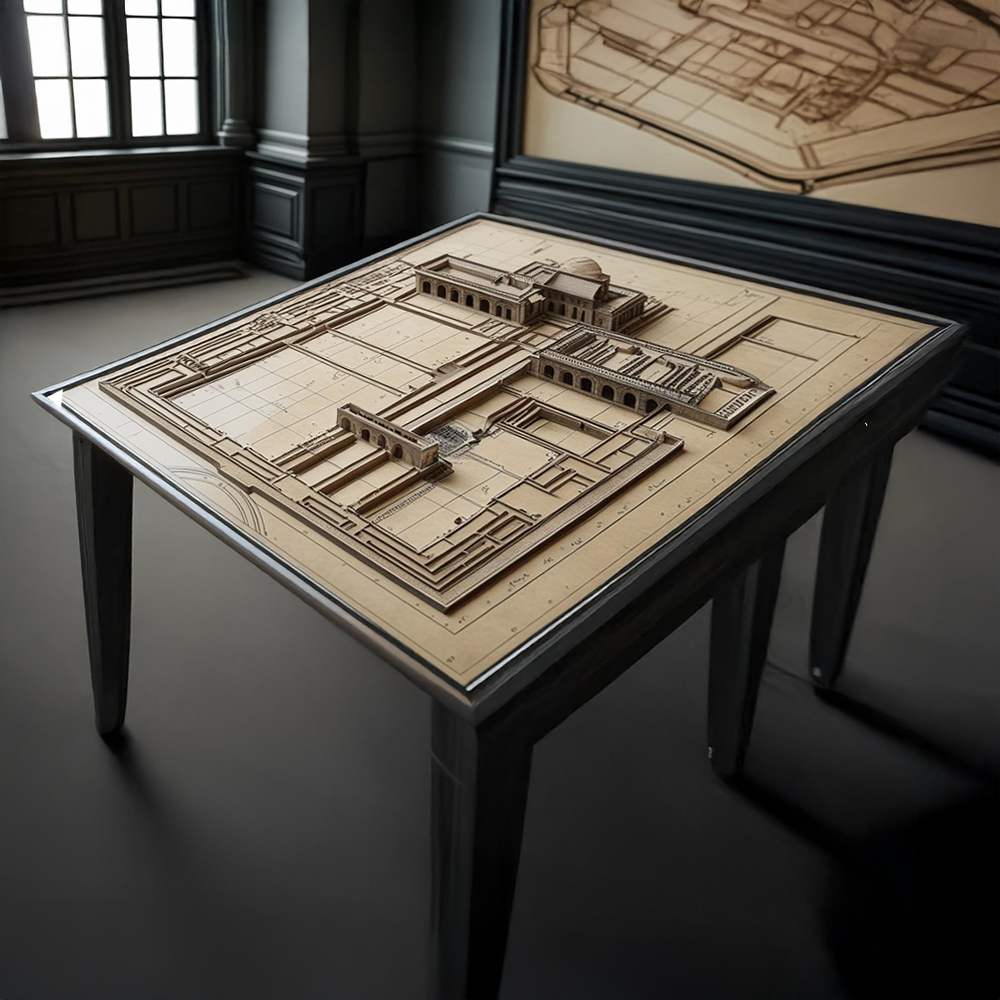
Through a three-dimensional model simplified in relation to the scale of reduction, the volumetric articulation of the architectural organism is described. The model can be combined with a floor plan or elevation in relief drawing to combine volume and two-dimensional reading.

Architecture Tactile Table
Architecture Touch Table Concept

Three-dimensional models of architectural details, objects, animals, plants, and tools accompanied by short texts or relief drawings provide a deeper understanding of important elements.

Tactile Detail Table

Data Sheets

Read more

TABLES FEATURES

Table Materials:
Plexiglas, Polycarbonate, Corian, Dibond, Wood, Aluminum, Acrylic, Stainless.

Panel Size:
can be made in standard sizes but large sizes (120×50 cm, 100×50 cm) or customized sizes are recommended for this type, to be evaluated.

  • Type A: 120 x 50 cm.
  • Type B: 100 x 50 cm.
  • Type C: 70 x 50 cm.
  • Type D: 50 x 50 cm.

Printing Technology:
Additive or Subtractive

Complies with regulations:
DPR 503/96, ADA, UNI 8207, ISO 17049

Three-dimensional Model of detail enhances the tactile experience

Symbolic logo of a three-dimensional detail model

Low-relief reproductions of architectural or artistic details are essential tools for improvingaccessibility andsensory experience in all places such as museums and exhibition spaces, parks, monumental complexes, public buildings) where we want to communicate elements that are not easily reached or directly experienced by touch (animals or parts of them, elements of vegetation, architectural and decorative elements).
By integrating these bas-reliefs into the Tactile Panels and Tactile Tables, it is possible to offer visitors the opportunity to explore and understand, through the sense of touch, much more information and data geometric, volumetric, formal e proportional, relative to natural, artistic and architectural features.
These three-dimensional models thus make it easy to explore shapes, proportions and those details that would otherwise be difficult to access.

For example, the reproduction of a Corinthian capital (or semi-capitol) allows one to appreciate its intricate floral decorations, while a bas-relief of a part of a historic facade offers a tangible understanding of its stylistic features.
The integration of such reproductions into Tactile Panels and Tables not only facilitates theinclusion, but it enriches the museum experience for all visitors. The ability to touch and feel the elements creates deeper emotional and cognitive engagement, making the visit more interactive and memorable.
In addition, the use of different materials in the creation of bas-reliefs can simulate the original textures of what is offered, providing an even more realistic perception.
The combination of these reproductions with other technologies, such as audio descriptions or applications interactive, can further expand audience accessibility and engagement.

MEDIA CHARACTERISTICS

Tables can be installed on different types of structures made of shapes and materials to suit the context

  • Material Supports:
    Iron, Iron/Corten, Wood or Aluminum
  • Support Type:
    Floor: Horizontal

IMPLEMENTABLE INTERACTIVE TECHNOLOGIES

The panels are all equipped with QR Codes to download PDFs, voice descriptions, and Lis Videos in sign language for the deaf and to access additional in-depth content.

They can be implemented of technological services such as:

  • Web App for QR Code + NFC
  • Smart App for QR Codes + NFC + Beacons
  • Audio Descriptions
  • Immersive Audio Descriptions
  • LIS video
  • Olfactory Installations
  • Immersive Installations + AR