


Discover the AGRITECH trail at Tuscia University: eight thematic stations on sustainable animal husbandry, with CITISLAB tactile panels and inclusive science outreach.
As part of the European Union-funded National Research Centre for Agricultural Technologies (AGRITECH) Project – NextGenerationEU, theUniversity of Tuscia has developed an innovative experiential science popularization pathway dedicated to sustainable animal husbandry, animal welfare, environment and technological innovation.
The project is part of the activities of Spoke 5, focused on resilience and sustainability of livestock systems.
A permanent path of popularization: 400 meters among science, environment and innovation
The path, built at the Riello Campus of the University of Tuscia in Viterbo, stretches about 400 meters through green areas and transit spaces. It is a permanent intervention designed to provide a learning experience:
- accessible,
- multisensory,
- immersive,
- Updated in real time through digital technologies.
The walk is divided into eight thematic stations, each of which is an equipped stopping point designed to bring citizens and students closer to livestock sustainability issues.
The eight stations: science and prejudice compared
The route is based on a key idea: science popularization must confront widespread societal prejudices.
Each station in fact presents a scientific theme along with a very common prejudice, turning this tension into an educational opportunity.
The eight thematic stages
- Farmed animals and their significance to humans
Prejudice: “Animal foods are bad for your health.” - Animal Welfare and Environmental Impact
Prejudice: “Farmed animals are mistreated and are harmful to the environment.” - Climate change
Prejudice: “Climate change does not exist or is not man-made.” - Climate Change and Animal Welfare
Prejudice: “Research in animal husbandry only serves to increase productivity.” - Protecting animals from the changing climate
Prejudice: “Livestock innovation is against nature.” - The real impact of livestock farming on climate
Prejudice: “Livestock farms are the main contributors to climate change.” - Sustainable livestock: climate action
Bias: “Livestock sector does nothing to reduce environmental impact.” - Ecosystem services of livestock farms
Prejudice: “Livestock farms only cause damage to the environment.”
This approach makes the journey narrative, critical, and engaging, stimulating a more informed understanding of the relationship between animal husbandry, the environment, health, and technology.
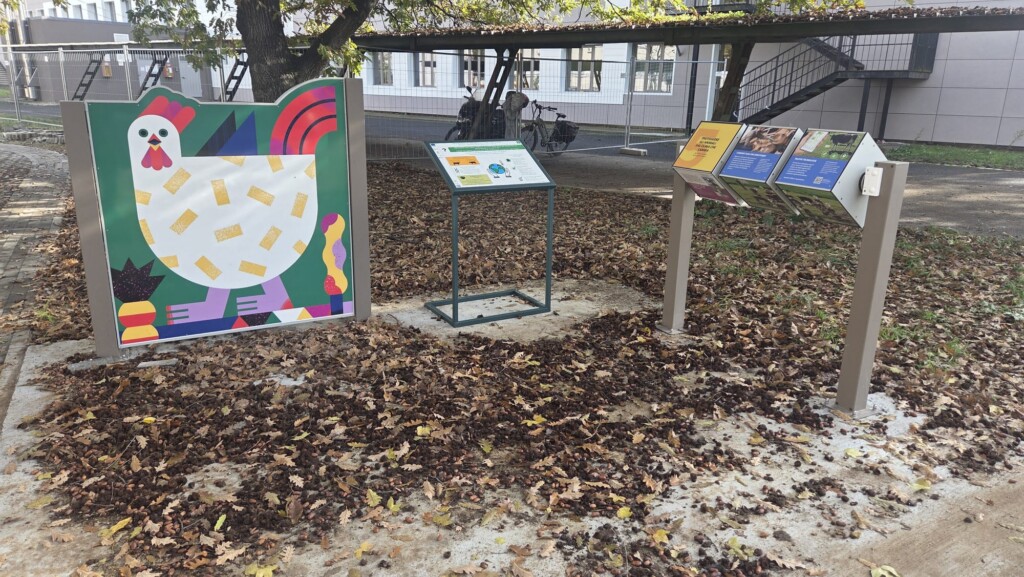
One of the stations of the AGRITECH Pathway at the Riello Campus - University of Tuscia, Viterbo
A multisensory experience: art, tactile and digital
Each station of the trail is designed as an experiential environment articulated in several integrated elements:
- Monolithic concrete seating designed to encourage pause and contemplation;
- an iconic work by Camilla Falsini, dedicated to the representation of a farm animal;
- a tactile panel, equipped with reliefs and Braille text, to ensure inclusive use;
- an interactive installation consisting of four rotating cubes, which present the station description and make the cognitive approach more playful and dynamic;
- a digital page accessible via QR code, containing up-to-date scientific content and insights.
These elements integrate visual, architectural and digital languages for dynamic and immediate communication.
CITISLAB’s contribution: tactile panels for accessible science
CITISLAB oversaw the creation and installation of the 8 tactile panels summarizing the contents of the thematic stations, along with two tactile floor plans placed at the entrances to the route.
Through these installations, the project ensures an inclusive experience aimed at:
- Visually impaired people,
- People who are blind or visually impaired,
- People with hearing disabilities,
- visitors with different cognitive and sensory styles.
The tactile transposition of scientific content-from maps to diagrams-makes it possible to overcome communication barriers and turn outreach into a multisensory, participatory experience.
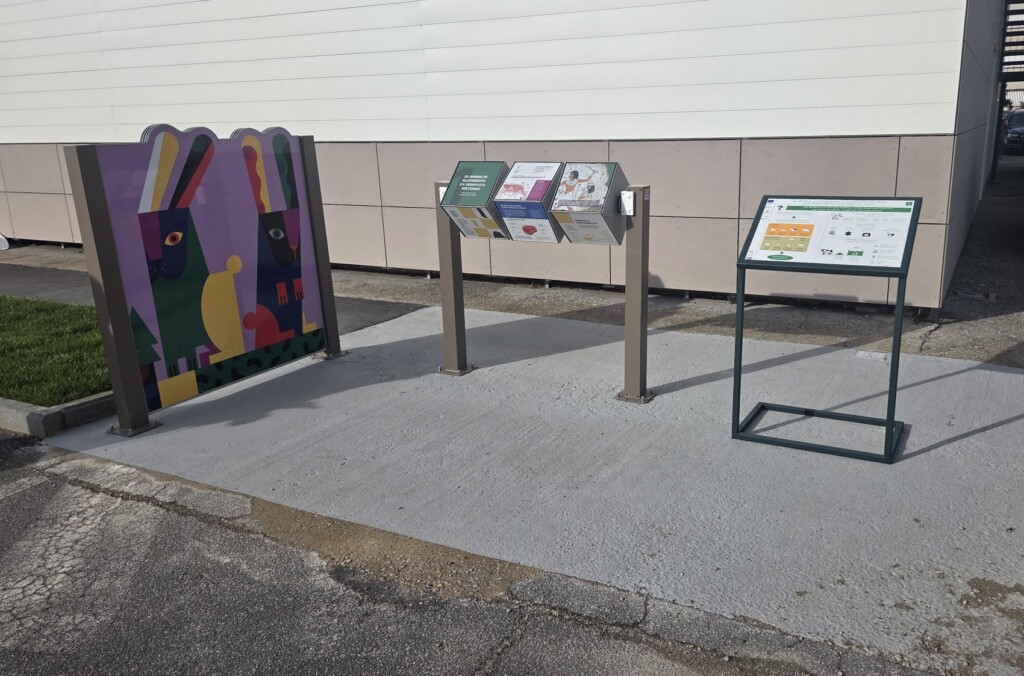
One of the stations of the AGRITECH Pathway at the Riello Campus - University of Tuscia, Viterbo
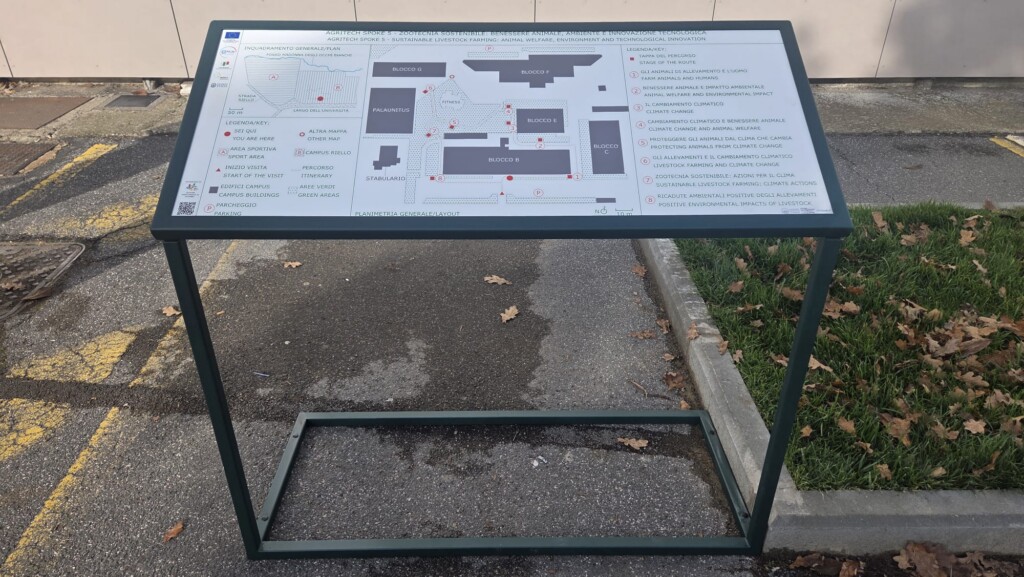
The tactile map of UNITUS' AGRITECH pathway in Viterbo.
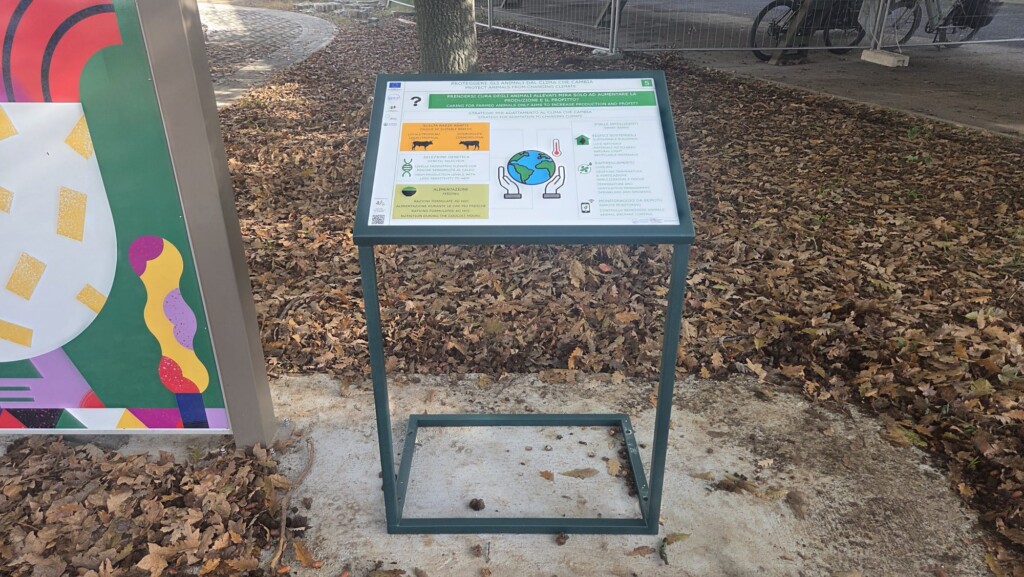
Detail of one of Citislab's Science Panels for AGRITECH
Tactile Science Panels: telling processes to understand the world
CITISLAB’s Tactile Science Panels are a valuable resource for illustrating complex biological cycles and agricultural processes. They can include:
- raised diagrams and diagrams,
- photographs translated into tactile graphics,
- explanatory bas-reliefs,
- Braille texts,
- In-depth digital content via QR code.
They are particularly useful for communicating topics such as:
- crop rotation,
- Sustainable use of water resources,
- Agroecology practices,
- Relationships between livestock, crops and environmental impact,
- AGRITECH world innovations.
Why multisensory outreach is critical
Communicating not only data, but also scientific processes, enables visitors to develop a more dynamic view of nature and human practices.
This approach:
- makes science clearer and more accessible,
- Facilitateslearning for people with sensory or cognitive disabilities,
- enriches the experience of any visitor,
- Promotes awareness, dialogue and participation.
The AGRITECH track at the University of Tuscia, together with contributions from CITISLAB, represents a virtuous model of inclusive science outreach and an example of how technology can expand access to knowledge.