


Reading monuments according to thematic interpretations
Among the different Sensory Itineraries we propose, theMonumental Itinerary represents a widely applicable theme: the entire world is dotted with monuments that man has built over the centuries to intentionally leave a strong mark of his presence and the strength of his civilization.
A monumental site is a place of strong cultural-historical, architectural, artistic, or archaeological importance: this strong connotation causes the site to be considered overall as a single monument.
So a Monumental Itinerary concerns not only a single building but tends to encompass a circumscribed geographic area that, through the significant presence of one or more elements of cultural-historical interest, bears concrete witness to an era, a civilization or a particular aspect of cultural heritage.
As acceptable as it is, accordingly, to study a tour route that takes place entirely within the monumental complex, it is rather preferred to elaborate a much more comprehensive and wide-ranging proposal that connects it, according to thematic strands to be identified, with the context in which it is located.
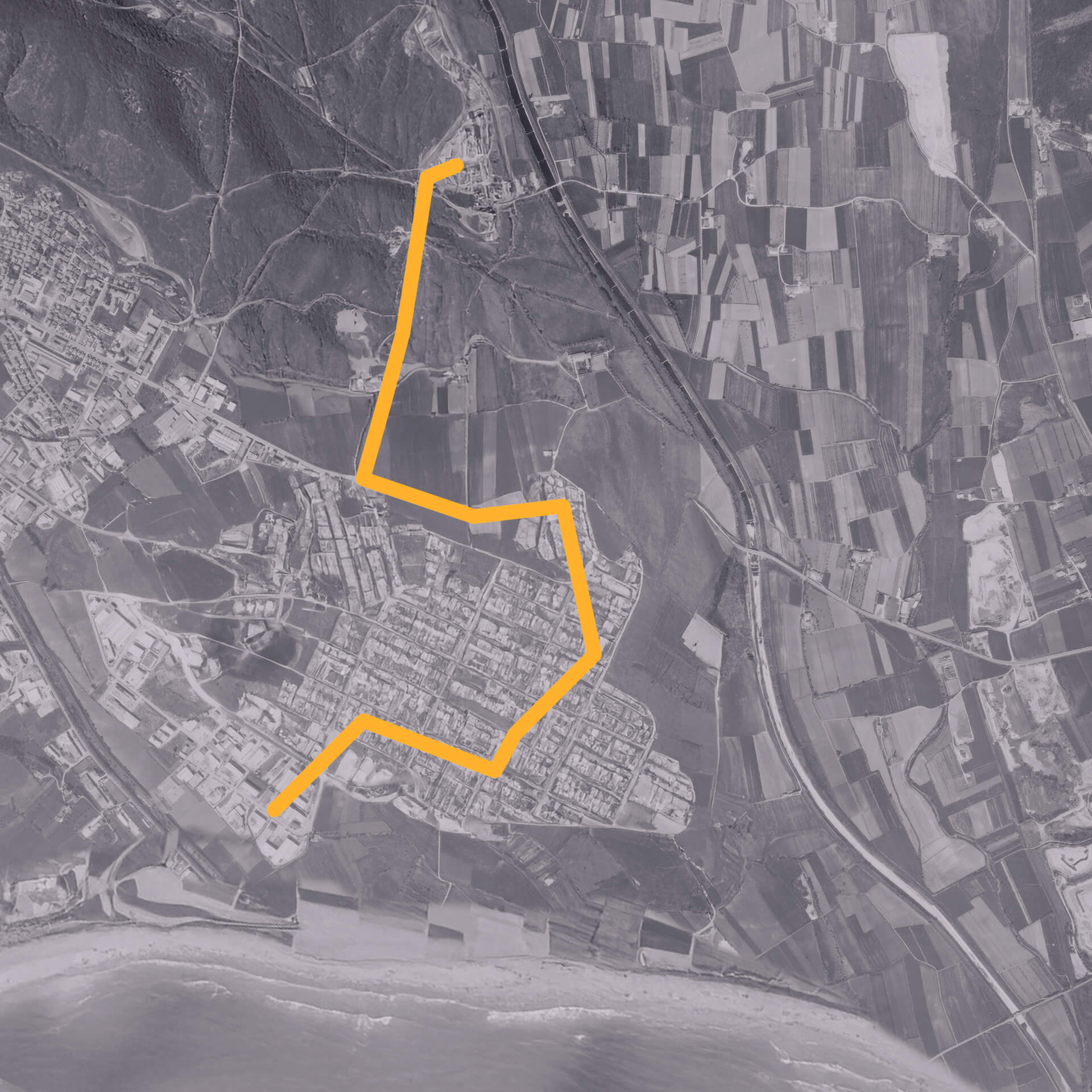
This will result in two experiential proposals very different, yet both characterized by an inclusive of the contents and suggestions offered to the visitor, who must be put in the conditions to enter inside the real knowledge of the artifact, to really feel it his own, to experience a controllable and familiar space, where he can interact by touching the material textures of the walls… the stones and bricks, the decorative marble elements or the wooden parts, accompanied by the installations for the inclusive communication of the contents.
In proposing a Monumental Itinerary, we can therefore assume two scenarios:
- Monumental itinerary on the relationships between the context and the architectural artifact
- Monumental itinerary on the architectural artifact.
In the first case by virtue of the more complex pathway, our different Accessible Solutions, composing types of Sustainable Microarchitectures (in that they are powered by photovoltaic and modular panels) such as Integrated Landscape or Tactile Totems, to be considered pivot points of the pathway, with the Tactile Realizations (Tables and Panels)..
Certainly microarchitecture can be installed. Integrated Landscape to welcome visitors and offer them the opportunity to recharge bicycles or scooters and present through Tactile Panels the Itinerary in its articulation, while if the route to reach the monument is long, at least one Tactile Totem to provide an information and resting point, as well as charging for devices.
Tactile Panels and Tactile Tables will then be placed inside the monument being visited for specific content on different rooms and places in the building.
All installations, outdoor and indoor, may be connected through technologies such as Beacons or NFC, which will provide in the dedicated App useful information about the services and potential of the place and the monument that is the object of interest, facilitating the acquisition of content through graphics and texts that are clear, brief and explorable by all.

In the second case, if we want to focus on the building itself by proposing a Monumental Itinerary that starts at its entrance, our proposal can still contemplate the installation of possible Tactile Totems with the function of welcoming visitors and as a stopping point during the route, alternating with Tactile Panels and Tactile Tables for communicating the peculiarities and contents of the historic building. These products could always be connected by technologies such as Beacons or NFC.
The main objective of a Monumental Itinerary is to propose a stimulating and original key to visit, one that strikes the imagination and develops curiosity: for this reason we believe that the interpretative key of multisensoriality can facilitate the experience and make it truly engaging.
The Monumental Itineraries however, have as their main focus the narrative of a monumental building and are consequently dedicated to historical areas and edifications such as: archaeological sites, castles and fortresses, palaces and monumental edifices, noble villas and aristocratic mansions, theaters, arenas, and historical libraries.
Combined solutions can then be adopted for a “for All” path of accessibility and inclusiveness to transform a monumental site into a barrier-free physical and sensory experience that is accessible to all, unique and engaging.
This Monumental Itinerary, starting from the UN Convention of 2006 on the rights of persons with disabilities, deploys a concrete strategy to facilitate conditions of accessibility e knowledge of all possible users.
Here visual stimuli are integrated with those derived from tactile perception, and further enriched by auditory stimuli: this results in amultisensory experience.
We believe that all visitors should be guaranteed the satisfaction of an engaging and enriching experience of “making a historic building their own.”
