The “Tactile Views from Cidneo” project continues at Brescia Castle
A sensory experience that has been expanding since 2022 to make one of Brescia’s most significant monumental complexes accessible to everyone. The visual-tactile panel at Locomotive No. 1, inaugurated on June 4, 2026, is the latest stop on a monumental itinerary developed through collaboration between institutions, academic research, and community organizations.
The Project: A Monumental Tour of Brescia Castle
Brescia Castle, a medieval complex on Cidneo Hill and one of the largest in Italy, has been home since 2022 to a progressively expanded sensory experience designed to enable inclusive access to its spaces, landscapes, and collections. The project *Il Castello per tutti* — Tactile Views from Cidneo — was born from a collaboration between the Lions Club Brescia Leonessa X Giornate and the Friends of Cidneo Committee, with scientific coordination by Ivana Passamani and the participation of the City of Brescia, the Italian Union of the Blind and Visually Impaired, and the Brescia Museums Foundation.
The tour currently consists of seven tactile panels located at strategic points throughout the complex: near the San Faustino Metro station, at the entrance to the Castle, in Piazzale della Locomotiva, on the Torre dei Francesi, and above the tunnel on Via Mazzini. The content is organized around three main themes: the relationship between the city and the Castle, the architectural structure of the monumental complex, and the panoramic views from Cidneo Hill. The panels are designed to be viewed both independently and as part of the overall route.
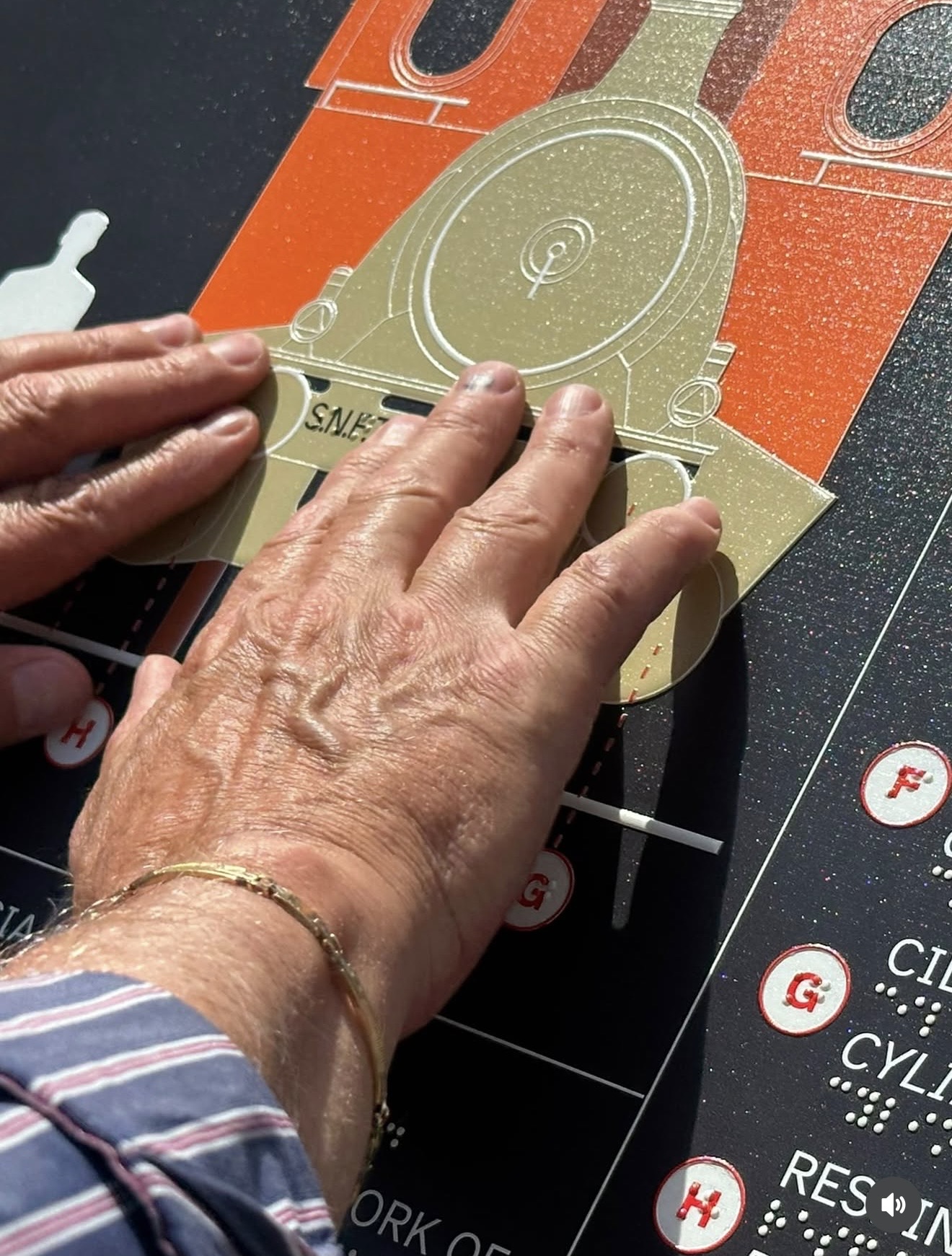
Locomotive No. 1: An Industrial Heritage Site Open to Everyone
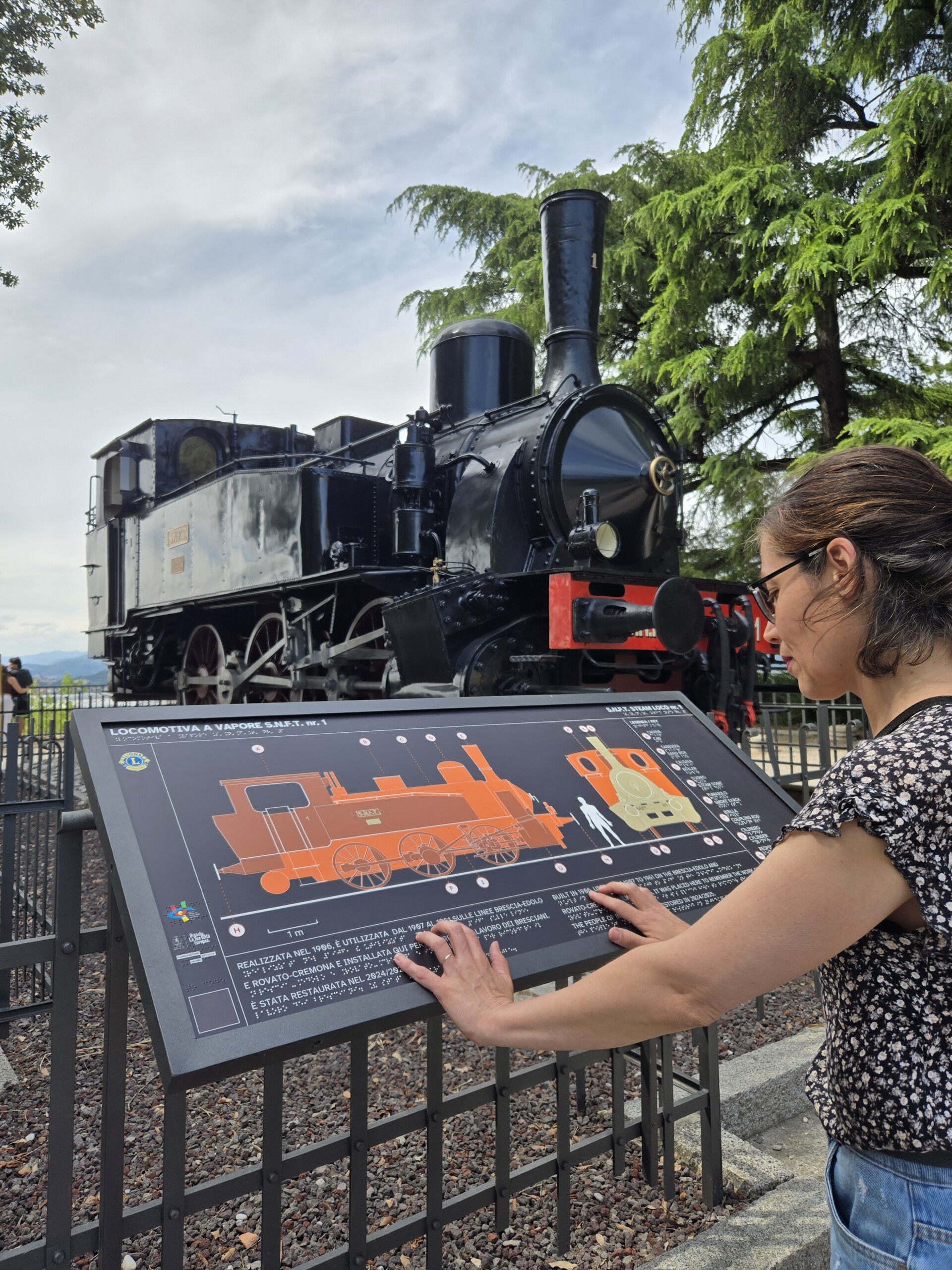
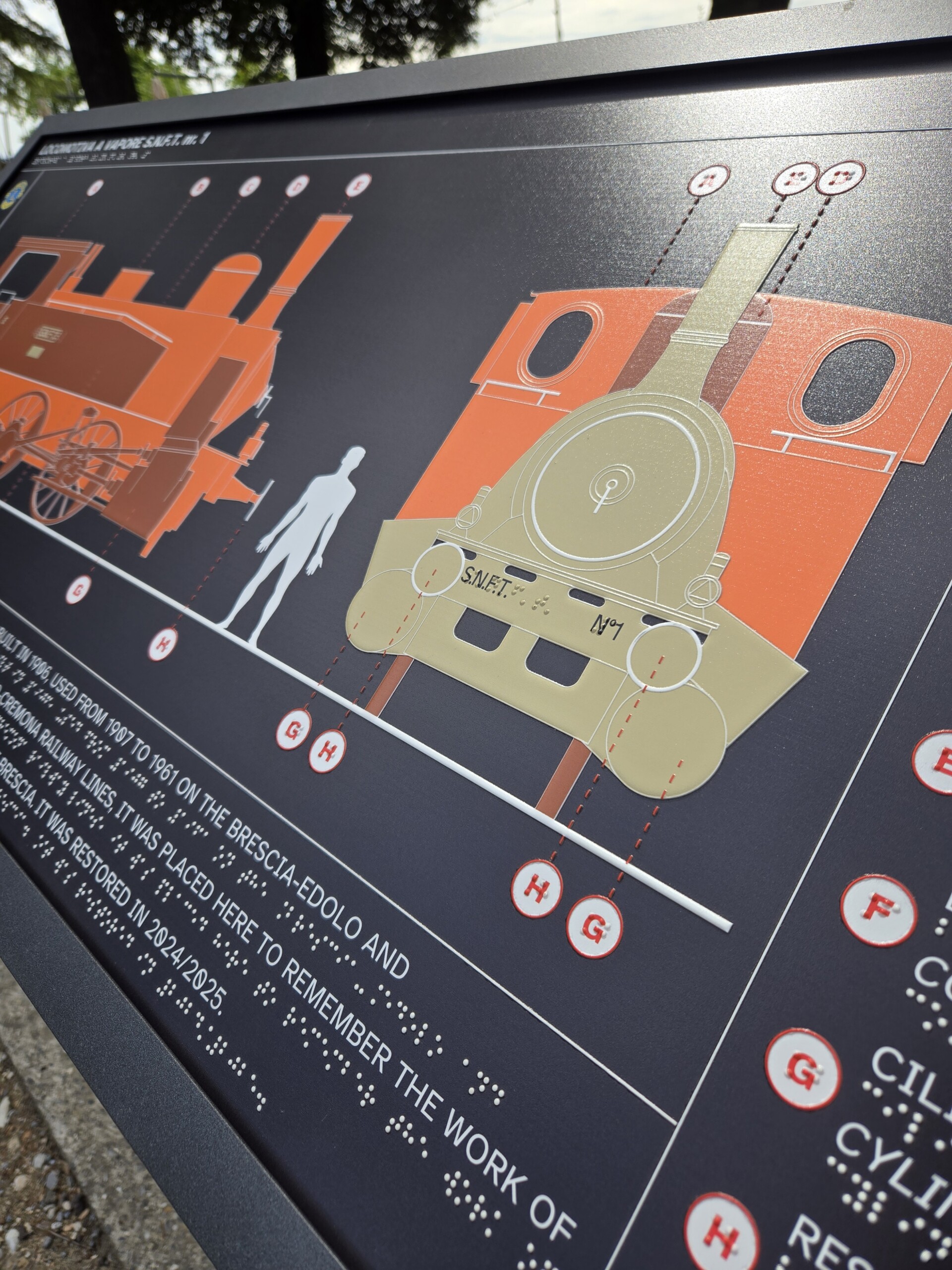
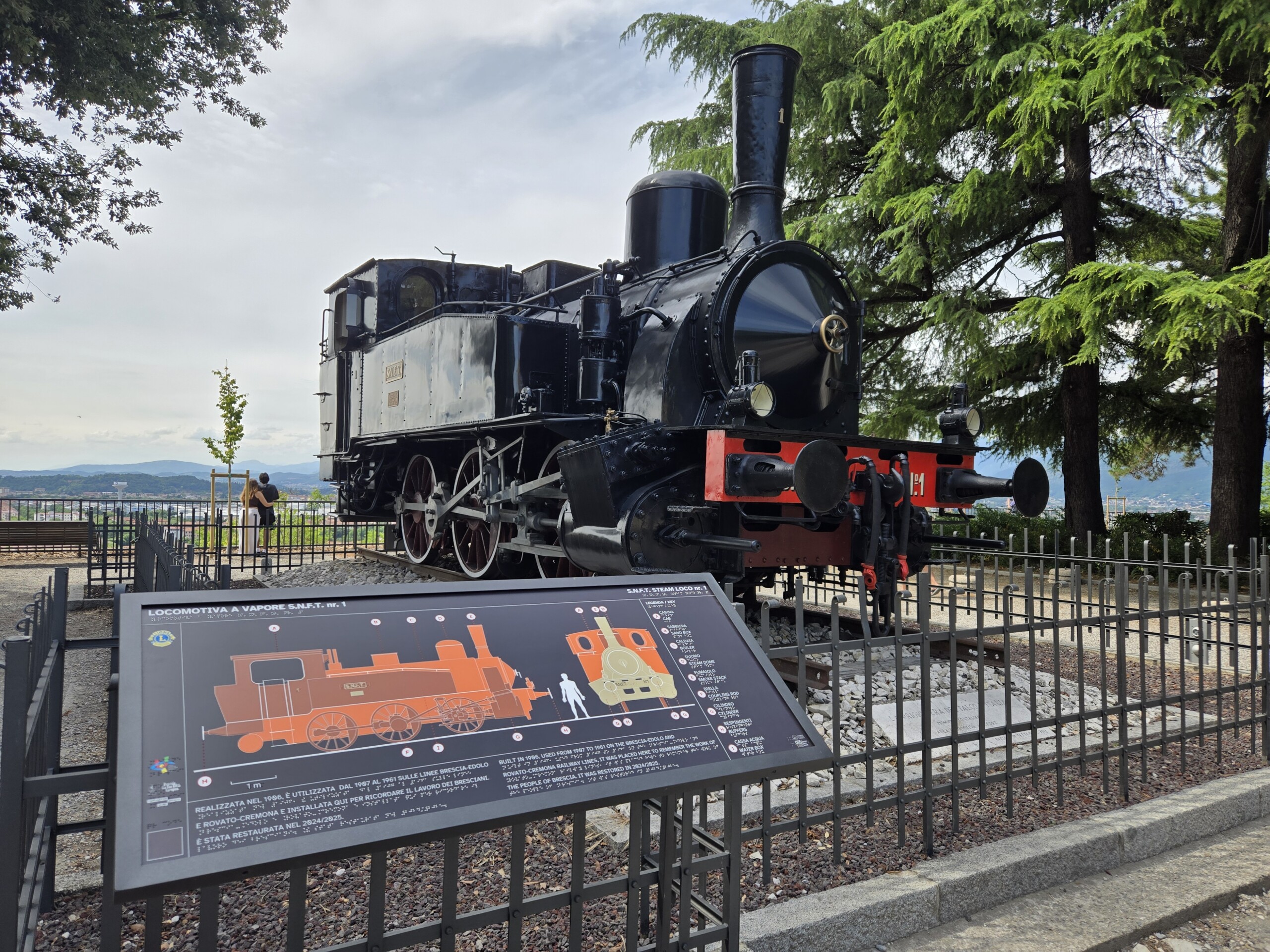
On June 4, 2026, a new visual-tactile panel dedicated to Locomotive No. 1 was unveiled in the castle square, positioned in front of the restored locomotive. The installation allows anyone to explore the locomotive’s shape and history through its raised-relief design, high-contrast colors, and text in plain language, English, and Braille.
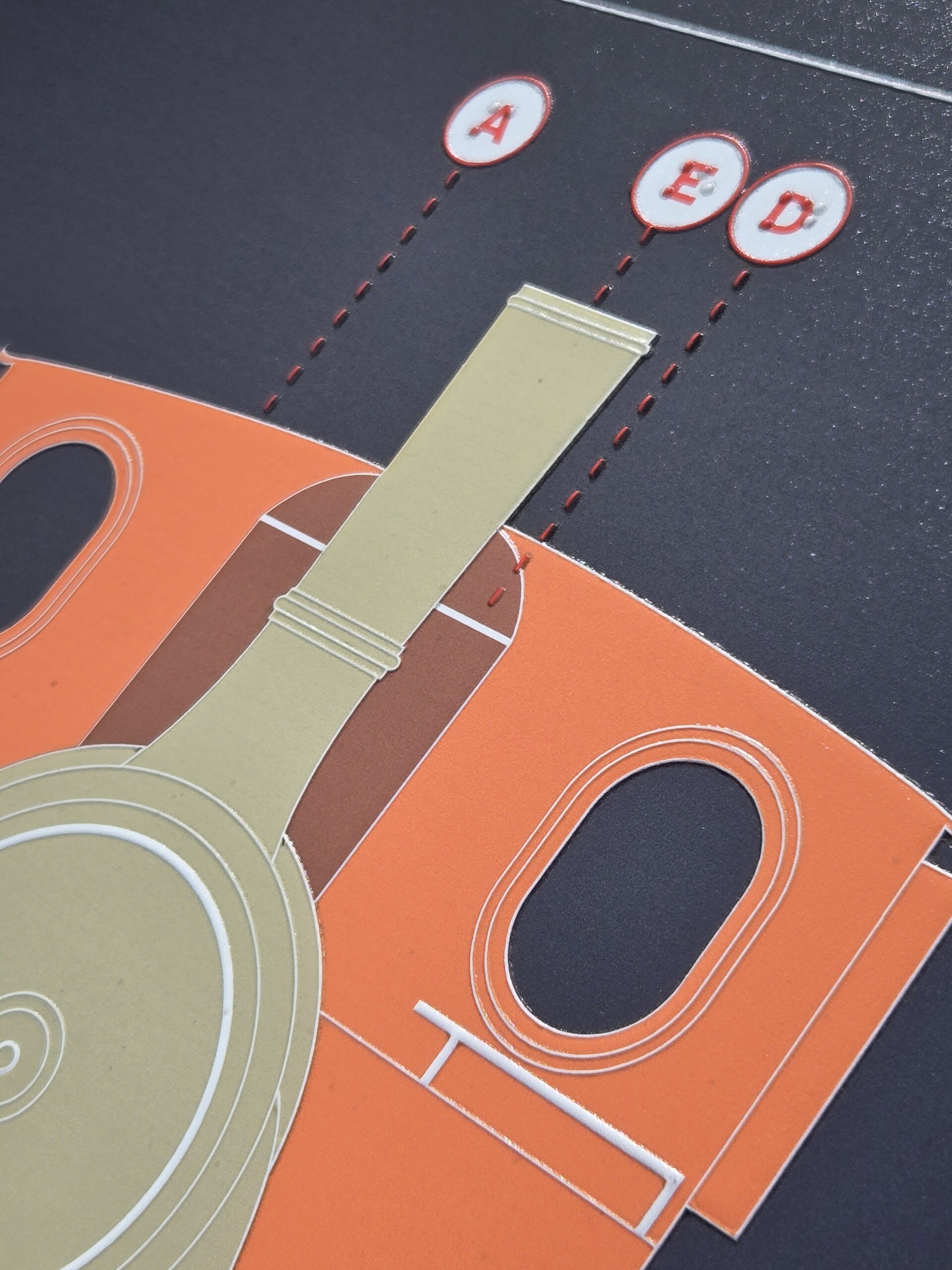
The tactile representation of an object such as a locomotive poses a specific challenge: to convey the technical complexity and physical presence of a large-scale artifact through surfaces that can be explored by touch, without oversimplifying or distorting its interpretation for sighted viewers. The approach adopted by Citislab, a spin-off of the University of Brescia, breaks down the image into its essential elements, varying thicknesses and textures to guide the understanding of its morphology and construction details.
Citislab’s Contribution: Methodology and Implementation
Citislab oversaw the entire process, from graphic design to production and installation, applying the methodology developed as part of academic research conducted since 2015 at the University of Brescia. The visual-tactile panel on Locomotive No. 1 is a “Tactile Science Panel,” a type of panel designed to communicate artifacts, objects, and processes through bas-reliefs, raised drawings, and Braille text integrated with content available in multiple languages.
The installation is part of a monumental itinerary—a concept that Citislab adapts to the specific characteristics of historic areas and buildings—designed to offer multisensory interpretations that highlight the genius loci without overshadowing the identity of the place. The panel is mounted on a stand tilted at a 30° angle in the castle square and is accessible without assistance: visitors can orient themselves and explore the content independently, in full accordance with the principles of Design for All.