


IN3ViE Project – Travel and Experiences Without Barriers
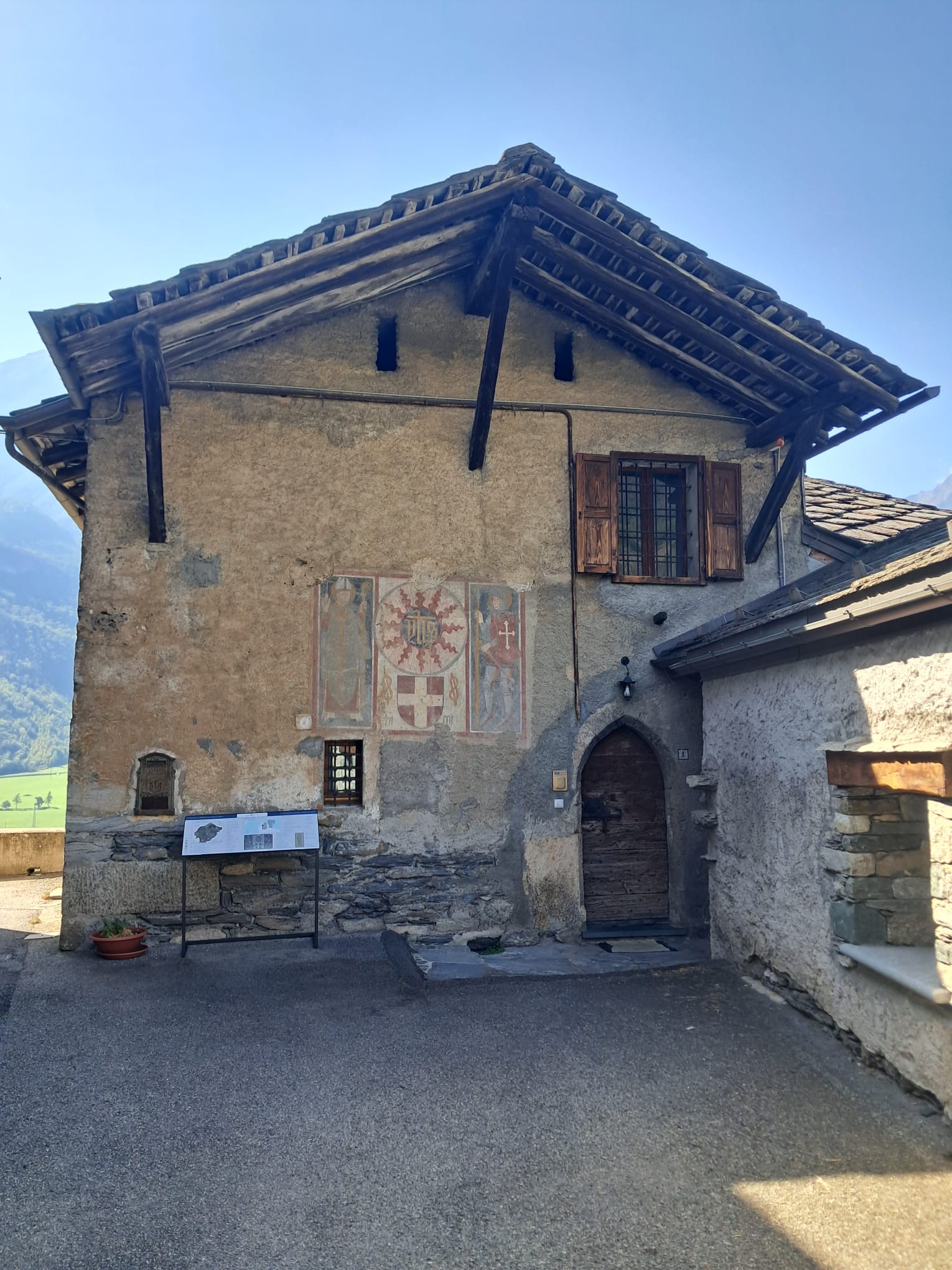
In Verrayes, in the Aosta Valley, Citislab SRL, a spin-off of the University of Brescia, has designed and created three visual-tactile panels that showcase the landscape, architecture, and art of the municipality. The project, completed in 2026, is part of the IN3ViE initiative —“Travel and Emotions Without Barriers”—co-funded by the European Union through the Interreg Italy-Switzerland program.
The Context: Verrayes and the Interreg IN3ViE Project
The Verrayes area is characterized by mountains, parish churches, and frescoes, and is crossed by the Via Francigena. The three panels are part of the IN3ViE initiative—“Travel and Emotions Without Barriers”—which promotes a cross-border network of accessible tourism destinations with the aim of highlighting the natural and cultural heritage, fostering social inclusion, and helping to spread tourism throughout the year.
The project was carried out in collaboration with the Canton of Valais, the Autonomous Region of Valle d’Aosta, and the Municipality of Verrayes, under the patronage of the UICI—the Italian Union of the Blind and Visually Impaired.
How can you convey the essence of a place through touch?
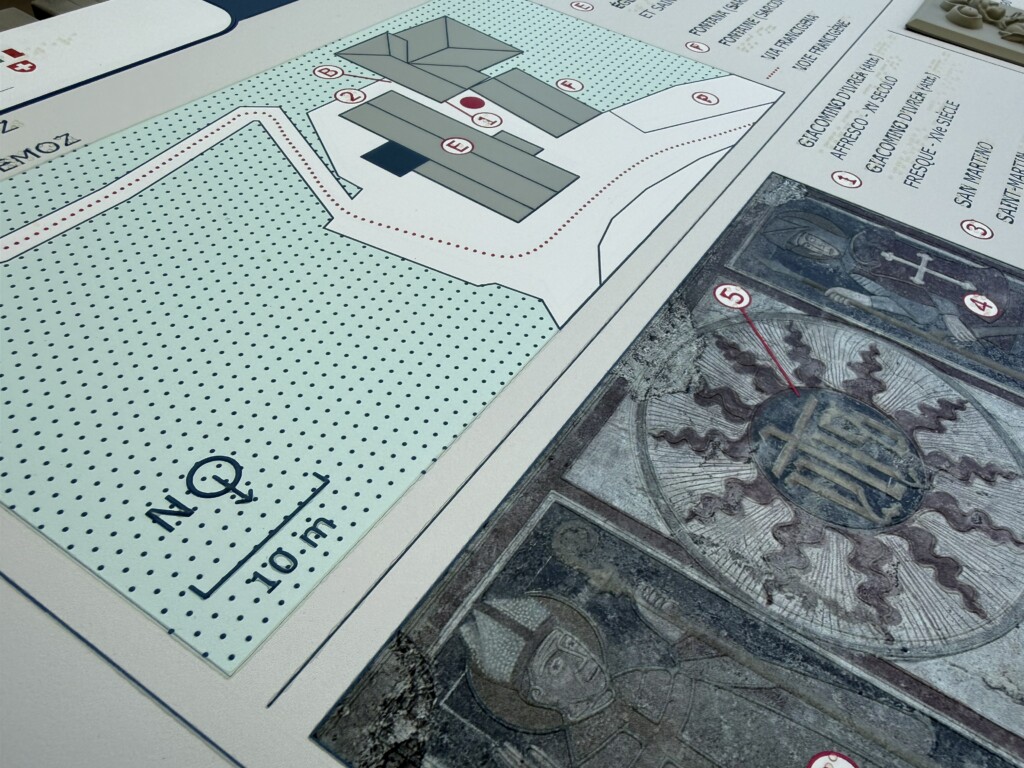
A territory is conveyed through touch, breaking it down into successive levels of interpretation—from the territorial scale down to the details—and transforming each image into a relief drawing. Each panel in Verrayes follows this progression: from an orthophoto of the territory to the floor plan of a building, down to a single fresco or a single plant.
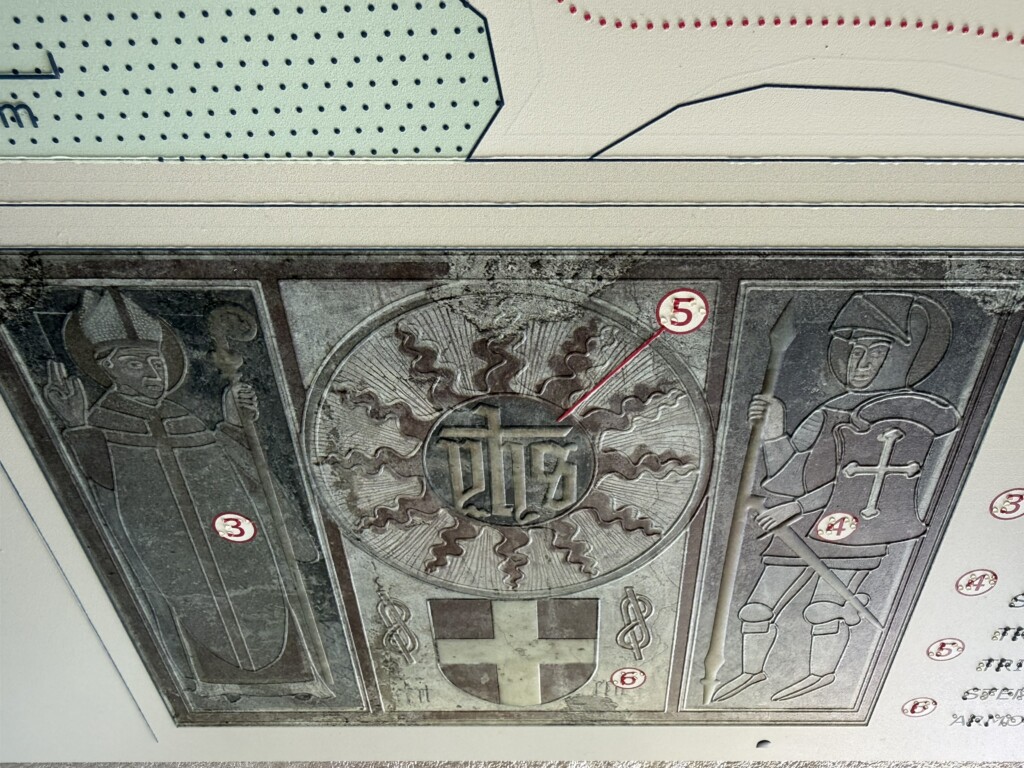
All the photographs on the panels are made accessible to the touch: the elements of the image are rendered as raised drawings, so that even the photographic landscape can be explored with the hands. It is this same tactile rendering that characterizes the Citislab’s tactile landscape panels by Citislab, in which touch becomes a sensory bridge between the visitor and the observed place.
Three stations, three themes: the content of the panels
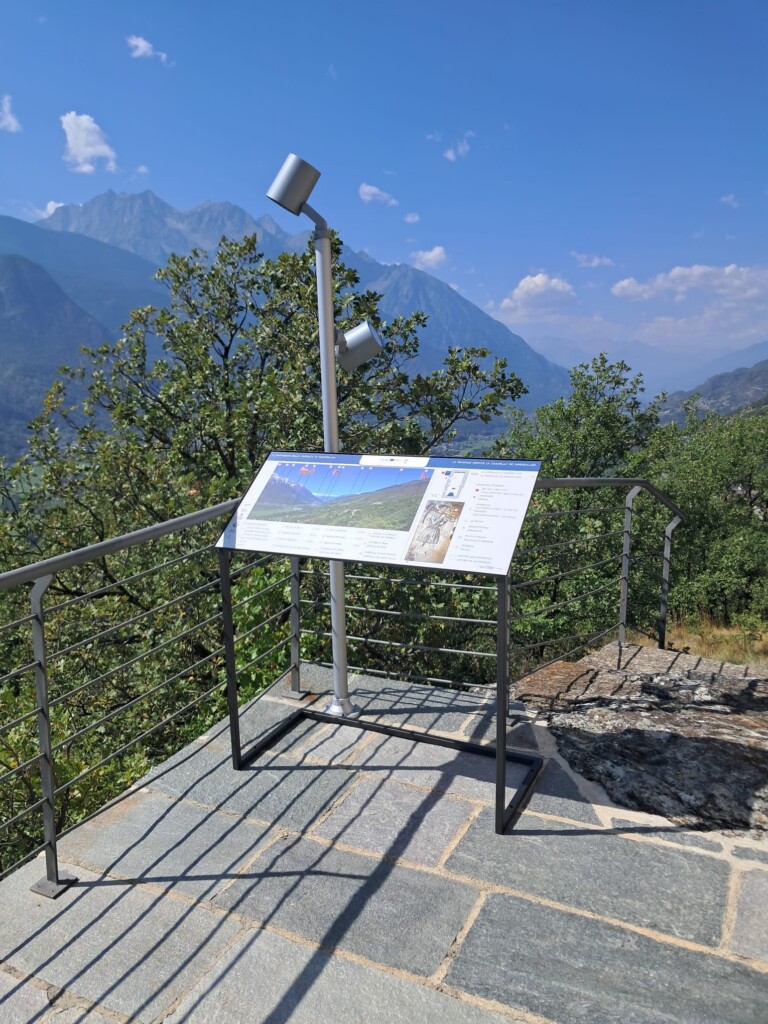
The three visual-tactile panels are located at the church in Diémoz, in the Champlong nature area, and at the chapel in Marseiller. Each panel addresses a distinct theme: the municipal territory and its religious architecture, the natural environment at high altitude, and the relationship between the valley landscape and 15th-century art.
The Verrayes Area and the Church of Diémoz
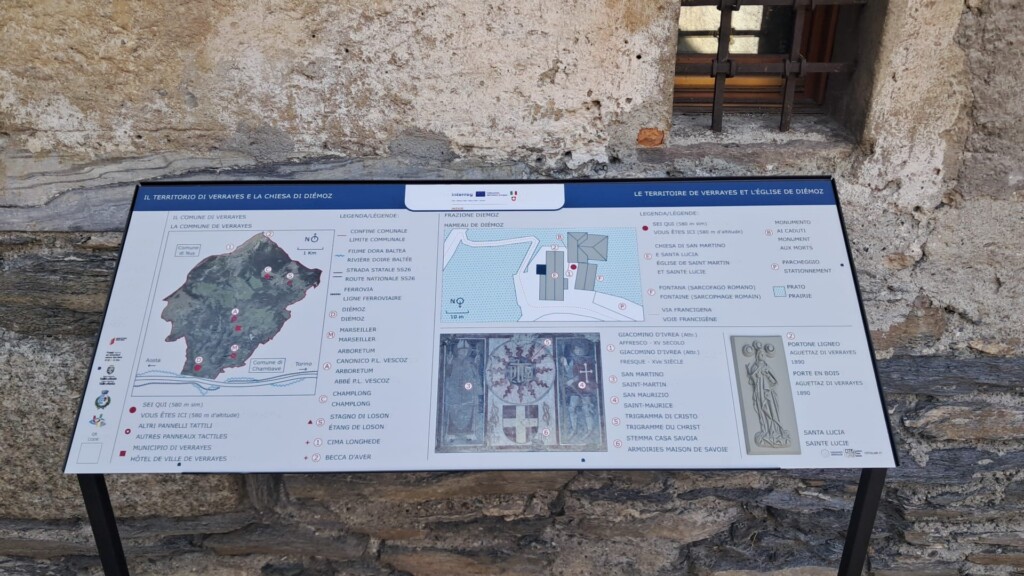
Located at the Church of Saints Martin and Lucy, on the Via Francigena, this panel provides an introduction to the entire municipal area. An orthophoto of Verrayes shows the visitor’s current location, the project’s other two panels, City Hall, and the area’s main points of interest: Diémoz, Marseiller, Canon P.L. Vescoz’s arboretum, Champlong, the Loson pond, Cima Longhede, and Becca d’Aver. On the right, the tactile floor plan of the church shows the panel’s location and the route of the Via Francigena. In the lower section, the focus shifts to closer details, featuring a photograph of the fresco attributed to Giacomino d’Ivrea, depicting Saint Martin and Saint Maurice, and a tactile bas-relief of Saint Lucy, based on the figures carved on the church’s wooden door.
Champlong Nature and Landscape Area
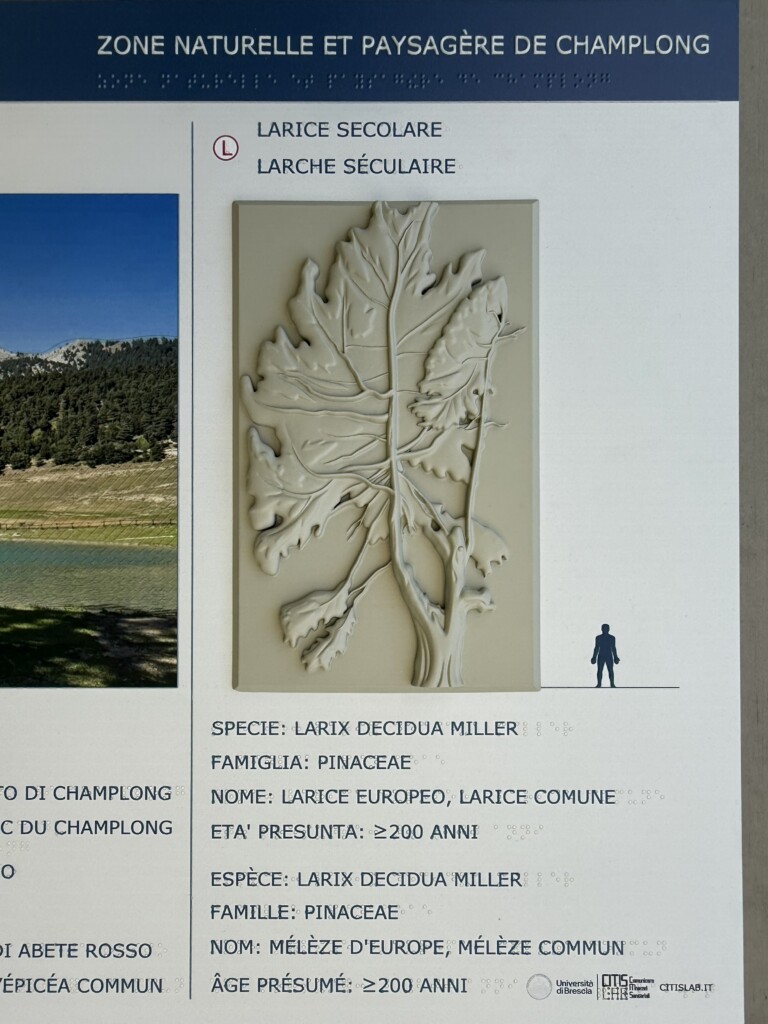
At the Champlong rest area, at an elevation of 1,650 meters, the panel depicts the surroundings in two different views. The orthophoto highlights the main features, including the route of the accessible trail and the centuries-old larch tree. On the right, a photograph of the landscape around the small lake—with the visible peaks (Cima Longhede and Becca d’Aver) rendered tactile—is flanked by a bas-relief of the centuries-old larch tree, allowing visitors to feel the shape of one of the area’s iconic plants.
The View from the Marseiller Chapel
From the scenic promontory on which the chapel stands, the panel brings the valley’s skyline to life. The photograph of the visible landscape, identifying the main peaks, is accompanied on the right by a floor plan of the chapel and a photograph of the fresco *Lo Reuvé*, attributed to Giacomino d’Ivrea and housed inside the building. Visitors are thus led from the vastness of the landscape to the intimate world of 15th-century art.
What are the Verrayes visual-tactile panels made of?
A visual-tactile panel is an informational display that makes the same content accessible through both sight and touch, combining raised relief images with high color contrast, text in standard print, and text in Braille. In Verrayes, two panels measure 120×50 cm and one measures 110×50 cm.
The panels are mounted on metal stands that are accessible even by wheelchair. The raised graphic representations feature high color contrast to allow for reading both by touch and by sight. The texts are in Italian and French, in both print and Braille in their respective versions.
A “Design for All” Approach
In Verrayes, the principle of Design for All translates into inclusive communication that makes no distinction among visitors: the panels enrich everyone’s experience, transforming a quick pass-through into knowledge, memory, and autonomy. The three stations form a path for interpreting the landscape outdoors—the theme that Citislab develops in its landscape itineraries.
For Citislab SRL, a spin-off of the University of Brescia, communication that is accessible to everyone is a way to turn the challenges faced by a few into a positive resource for all.