Inclusive research and communication for the architectural heritage of the twentieth century


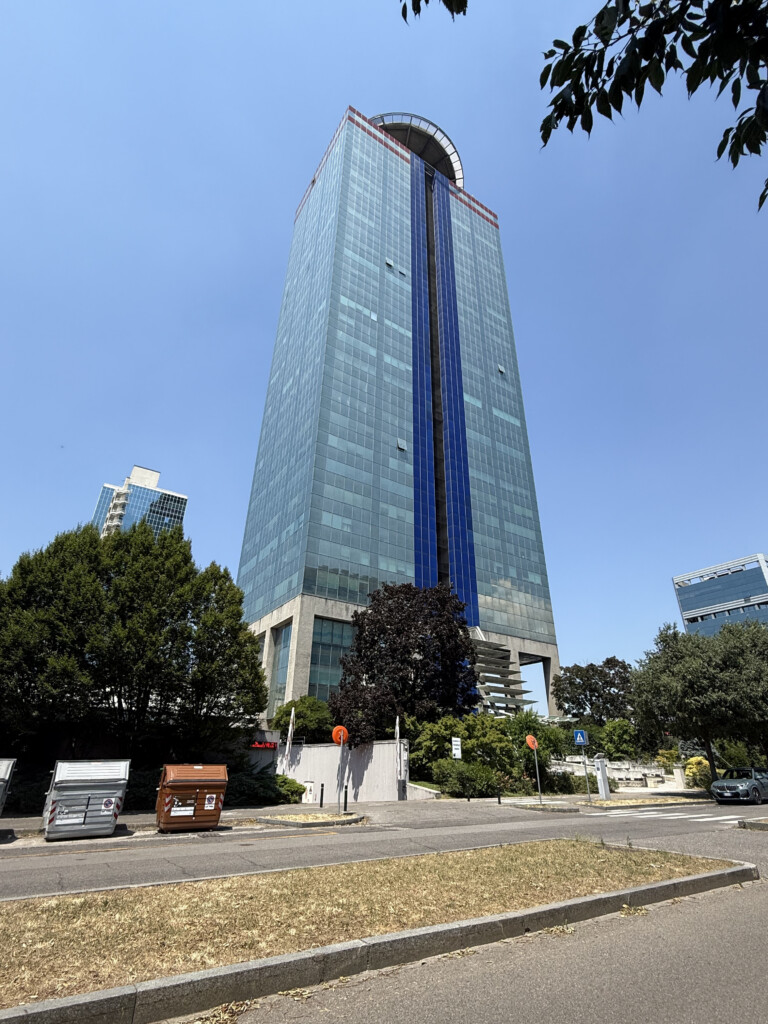
Identifying accessible languages for the enhancement of contemporary architectural heritage is one of the central goals of research activities devoted to inclusive communication of cultural content. The work dedicated to the Crystal Palace, a symbolic building of the modern skyline of Brescia and landmark of the city’s twentieth-century architecture.
During the 3rd Symposium “A Possible Dialogue. Days of Representation and Conservation of Contemporary Cultural Heritage” held on December 4 and 5, 2025 at the University of Urbino, Prof. Ivana Passamani presented research on the Crystal Palace in Brescia conducted with Vanessa Rosa Machado and Cesira Sissi Roselli.
The project stems from an in-depth analysis of archival materials and original drawings by architect Bruno Fedrigolli, author of the building constructed in 1992. The study of the different design phases, from the first hypotheses of 1988 to the final realization, allowed to reconstruct the genesis of the building and to understand its main compositional elements: a structural base and a large glass parallelepiped characterized by colored horizontal and vertical bands.
From this analysis, the design was developed for a communication device based on tactile panels and a three-dimensional model designed for visual and tactile exploration of architecture. The translation of the architectural design into relief drawings for the blind and into three-dimensional representations involves careful consideration of scale, materials and textures so that the volumetric features of the building can also be understood through sensory experience.
The 3D model and the tactile panels thus become tools of knowledge and dissemination, capable of making complex architectural information accessible to a wider audience. These devices make it possible to build a path to reading the building based on direct exploration of forms and understanding of spatial relationships.
This approach is fully part of the research activities developed in Brescia on the themes of cultural accessibility and inclusive design. Through tactile tools and three-dimensional models, it is possible to encourage a more conscious enjoyment of contemporary architecture and contribute to the spread of a culture of accessibility capable of enhancing the city’s heritage.
The project represents a further step in research activities dedicated to accessible communication of cultural content and design of tactile devices for architectural heritage knowledge.