Technology and Craftsmanship for a Unique Sensory Experience
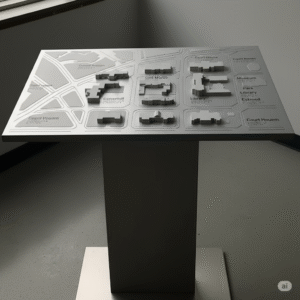
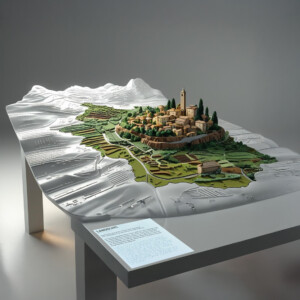
Precision and quality are at the heart of the creation of our tactile tables. The technology used to create these panels often makes use of high-resolution 3D scanning of the original objects, followed by very high quality 3D printing or other specifically chosen reproduction techniques. Alternatively, for bas-reliefs, we use methods that accentuate essential contours and distinctive details, offering a simplified but incredibly effective representation of the object. To ensure maximum accessibility, each table includes Braille descriptions and explanatory text, making the content usable for anyone, including people with visual impairments.
Our commitment is to offer tools that enable as many people as possible to have a fulfilling and satisfying experience. This vision has guided the development of our tactile tables, leading to original solutions that are the result of our team’s decades of experience. CITISLAB’s Tactile Detail Tables represent an innovative solution in the constant search for methods and supports capable of fosteringaccessibility within museums, exhibition areas and cultural contexts, offering valuable opportunities for inclusivity in visitor pathways. Their inherent nature makes them ideal for all types of visitors, using easily understandable language and forms.
Production Methodologies and Inclusive Quality
Low-relief and full-round reproduction methods are the most immediate and effective techniques for tactilely translating the form of an object that cannot be directly experienced. These tools not only enable people with visual impairments to define form and deepen their understanding of space and objects, but also broaden the experience for everyone.
The tactile tables developed by CITISLAB incorporate all the features dictated by tiflological best practices, ensuring an effective and universally accessible sign. This includes the correct implementation of reliefs and Braille writing, the preparation of simplified but content-rich drawings, the clarity of contour lines, and respect for the proportions of the elements. In addition, our tactile tables fully comply with current laws and regulations regarding usability of places and overcoming architectural barriers.
Our challenge was to study an accessible language capable of rendering, as faithfully as possible, the reality that surrounds us. For this type of tactile tables, respect for the proportions between parts and the correctness of the scale reduction of models and plans are fundamental. The material used for the model is chosen according to the characteristics of the object to be reproduced, with the goal of obtaining a reproduction that is faithful not only in form, but also in the tactile experience of the original material. To this end, we employ state-of-the-art technologies such as 3D printing, CNC milling, and laser cutting.
These three-dimensional models not only offer a multisensory and inclusive experience, but also serve a crucial preservation function: they allow the public to interact with an accurate replica while retaining the formal and textural characteristics of the original, while the original artifact is preserved from wear and damage from direct contact.
Strategic Placement and Educational Tool
Due to their descriptive nature, Detail Tactile Tables are ideal for placement within the exhibition itinerary of museums, galleries and archaeological sites. They present themselves as valuable knowledge tools, enabling visitors to understand and delve into the details of works and artifacts while ensuring their protection. The implementation of a three-dimensional model within exhibition routes can also become a useful teaching support for teachers and students of all levels in the study of art history, architecture and drawing.
Turn your exhibit into an unforgettable tactile experience that is accessible to all.
Tables can be made with standard dimensions or custom sizes upon request, to be evaluated.
Request a quote for your Tactile Detail Table now by clicking on “Quote Request Guide” and begin your sensory exploration!